Dungarees & overalls
Dungarees for a one-year-old: what to look for
Choosing dungarees for a baby aged 12 to 24 months: denim, twill or corduroy, fastenings for quick changes, length for new walkers, winter layers.
Why dungarees suit a one-year-old
Dungarees are one of the most practical things a one-year-old can wear. Look for a fabric that bends easily, fastenings that open for a quick nappy change, legs that end at the ankle rather than on the floor, and enough room underneath for a winter layer. Get those four right and the size and colour are the easy part.
The second year is the year of standing up, cruising along the sofa, squatting to pick things up and climbing onto everything. Ordinary trousers slip down at the back when a baby squats and ride up when they reach, leaving a cold gap at the waist. Dungarees hang from the shoulders, so nothing slips, the tummy stays covered, and the bib catches some of the mess from a baby who now insists on feeding themselves.
Fabric: how stiff, how warm
Most baby dungarees are made from denim, twill or corduroy, sometimes with a little stretch. Each can be comfortable; what matters at this age is stiffness. Before you buy, fold a leg in half and squeeze it. If it bends easily and springs back, a baby can kneel and squat in it. If it holds a hard crease, it will feel like cardboard on a toddler who crawls one minute and climbs the next.
- Denim: hard-wearing and good for crawling knees. Choose a soft, washed or stretch denim, not a heavy, rigid one.
- Twill: usually lighter and softer than denim, and quicker to dry on short winter days.
- Corduroy: the warmest of the three, with a soft surface, and a good choice for colder winters in Lahore, Islamabad or Peshawar.
- Knit: the softest and stretchiest, though knit dungarees bag at the knees and wear thin sooner.
Fastenings for quick changes
A one-year-old rarely lies still for a nappy change, and many changes now happen with the baby standing up, holding the edge of the sofa. Fastenings matter more now than at any other age, so check three places.
First, the inside leg: snaps there let you change a nappy without taking the dungarees off, but many woven pairs don’t have them. Second, the sides: buttons at the hips open the waist wide, so the dungarees slide down and back up over a standing baby. Third, the straps: two button positions on the bib, or adjustable sliders, let the straps grow with your child through the year.
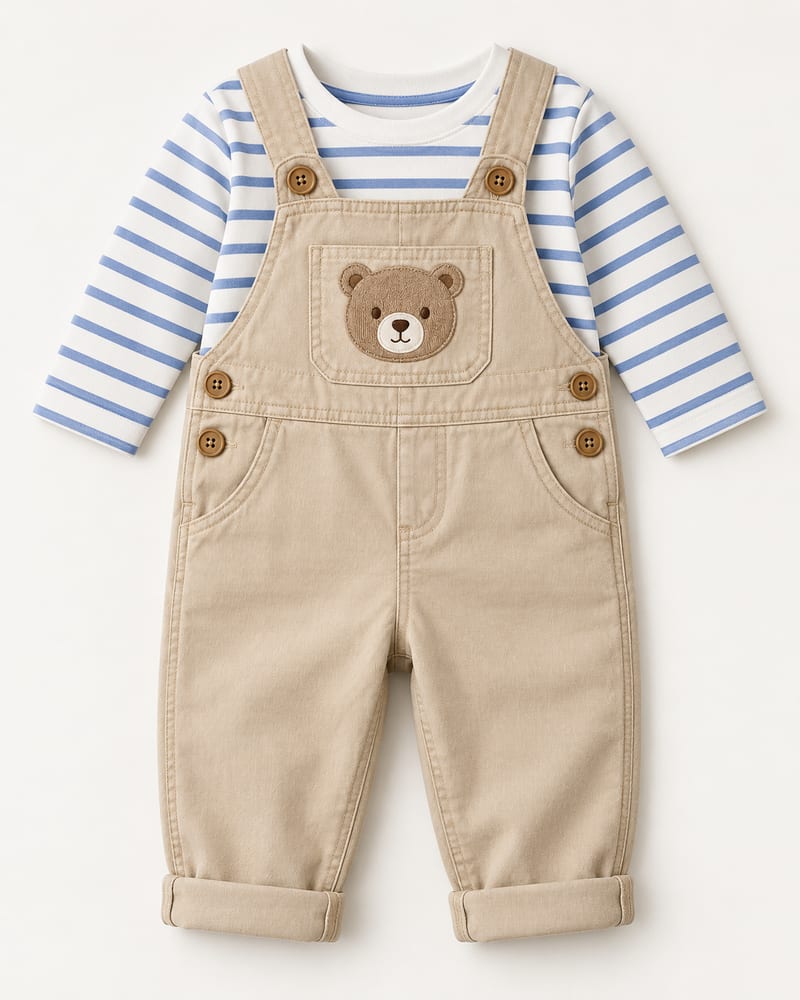
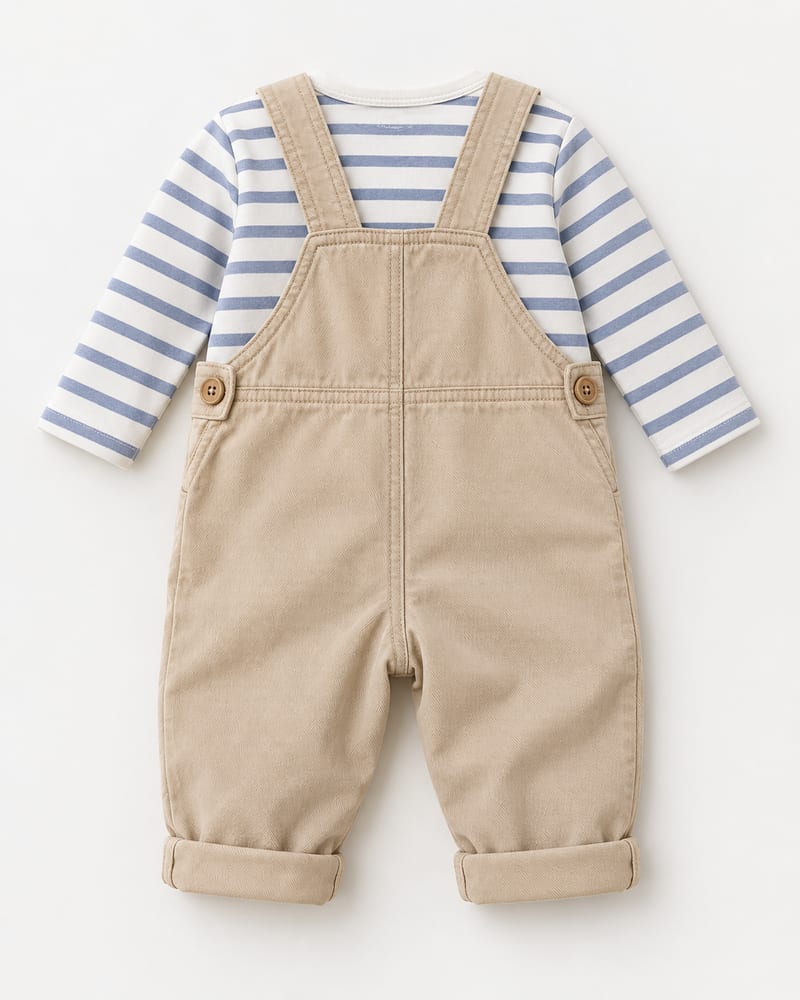
The Beige Teddy Dungarees & Striped Top Set has button-on straps and buttoned sides, so you can open the dungarees at the hips for a change. Whatever you buy, tug each button and snap before the first wear and every so often after washing, because a loose button is a choking risk for a child who puts everything in their mouth.
Length for a new walker
Leg length is where one-year-olds come unstuck, sometimes literally. Hems that drag on the floor catch under the toes as a baby pulls up, and on marble or tiled floors that means slips. When your baby stands, the hem should sit at the ankle bone or just above it, and if they go barefoot at home, that matters even more, because there is no shoe to lift the fabric clear.
Buying a little long and turning up the legs is fine as long as the turn-ups stay put; a couple of loose stitches will hold them. Turn-ups can be let down later as your baby grows taller, which buys extra wear. Room for growth is better gained through adjustable straps than through extra leg length. Our post on choosing a dungarees size covers the choice between 12–18M and 18–24M.
Room for winter layers
In a Pakistani winter, dungarees work as the middle layer. Start with a vest or bodysuit, then a long-sleeved top, then the dungarees, and add a sweater or jacket on top for going out. The bib adds an extra layer over the chest and tummy, and the back stays covered when they squat, which helps on cold floors.
Allow for those layers when you buy. If the dungarees only just fit over a thin top now, they will pull at the shoulders over a sweater in January. Let the straps out a notch and check that you can slide two fingers under the bib. Socks, or tights in colder cities, cover the gap between hem and shoe. Our post on what to wear under baby dungarees goes through combinations for each season.
A quick checklist before you buy
Run through these in a shop or against a product page before you buy. If your baby isn’t on the move yet, our post on when a baby can start wearing dungarees covers the younger months, and you can see every set we sell on the baby sets page.
- Fold a leg: it should bend easily and spring back.
- Inside-leg snaps or side buttons for changes.
- Straps with two button positions, or sliders.
- Hem at the ankle bone when standing, or turn-ups that stay put.
- Room for a long-sleeved top and a sweater underneath.
- Buttons and snaps firmly attached, with no loose threads.
- Flat, stitched-down pockets, and no small decorations a baby can chew off.
Quick answers
Are dungarees good for a one-year-old?
Yes. They stay up while a baby squats, climbs and walks, keep the tummy covered and protect the top from food. Choose a soft fabric and fastenings that make nappy changes quick.
What do you wear under dungarees in winter?
A vest or bodysuit, then a long-sleeved top, with socks or tights. Add a sweater or jacket on top for going out, and leave room under the bib for these layers.
Which dungaree fabric is softest?
Knit dungarees are the softest, followed by washed twill and soft corduroy. Rigid denim is the stiffest, so look for washed or stretch denim for a baby.
Should I buy 12–18M or 18–24M?
If your baby is near the top of 12–18M, or the dungarees need to last a whole winter over layers, the bigger size with the hems turned up usually lasts longer. Check our size guide against their height and weight.