Dressing a growing baby
Dressing your baby stage by stage, from rolling to walking
How dressing changes as your baby rolls, sits, crawls, stands and walks, with the clothes and techniques that suit each stage from about 4 to 24 months.
Every baby follows their own timetable
The ages below are rough. Babies reach each stage at different times, and many skip or blend stages, for example going straight from sitting to standing, or bottom shuffling instead of crawling. What matters is what your baby is doing now, not the age on their clothes label. If you are worried about your baby’s development, talk to your doctor.
Each stage changes how you dress them and which clothes work best, so a wardrobe that was perfect three months ago can suddenly feel wrong. Sizes still go by length and weight, so check our size chart by age, height and weight as they grow.
Rolling, often around 4 to 6 months
Changes become an escape attempt, because lying on their back is suddenly boring. Dress on a mat on the floor, where a roll can’t become a fall, use the roll to dress their back while they are on their tummy, and choose tops with wide or buttoned necks.
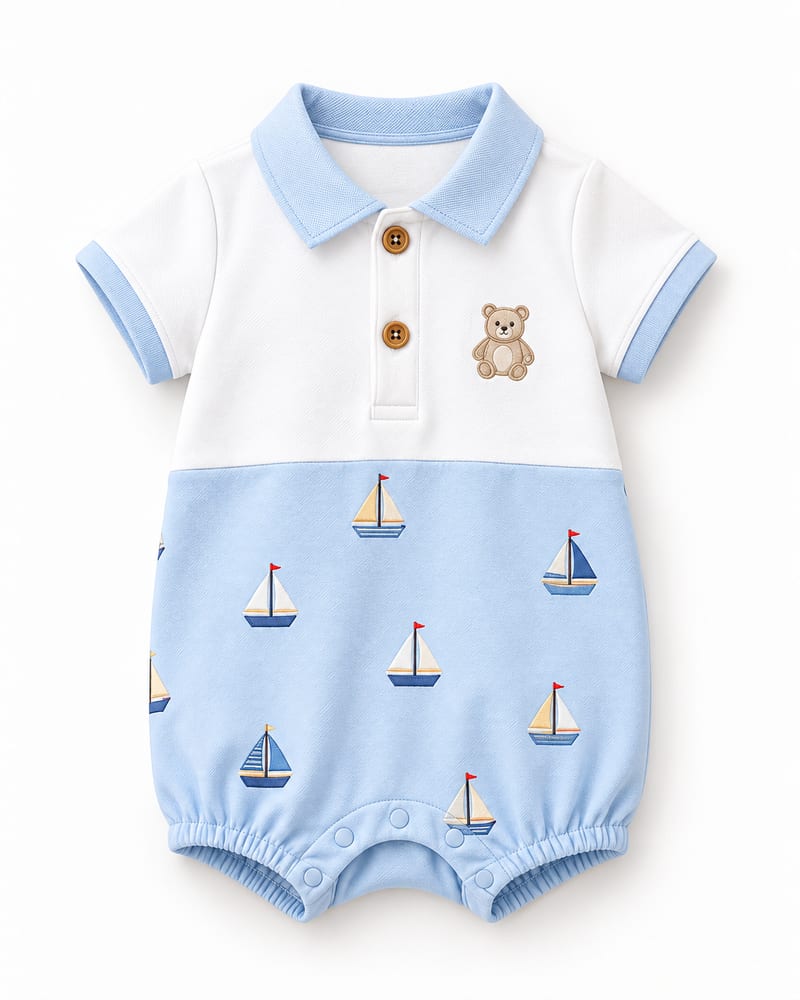
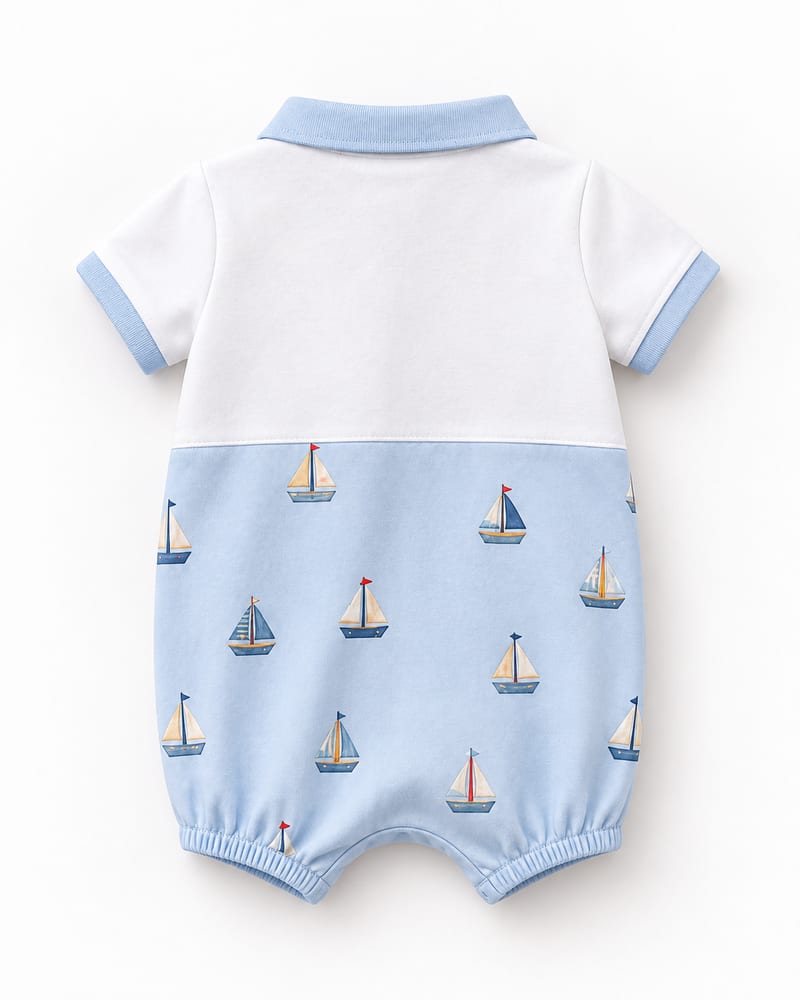
Rompers with snaps underneath, like the Sky Blue Sailboat Polo Romper, let you change a nappy without taking the top off.
Sitting, often around 6 to 9 months
Once they sit steadily, tops can go on with your baby on your lap facing away from you, which many parents find easier than lying them down. Waistbands matter more now: a firm waistband over a nappy can dig in when they sit and lean forward, so soft, stretchy knits are the most comfortable. Bulky fronts and stiff fabrics make balancing harder.
This is also when weaning usually starts, and mealtime mess begins.
Crawling, often around 7 to 10 months
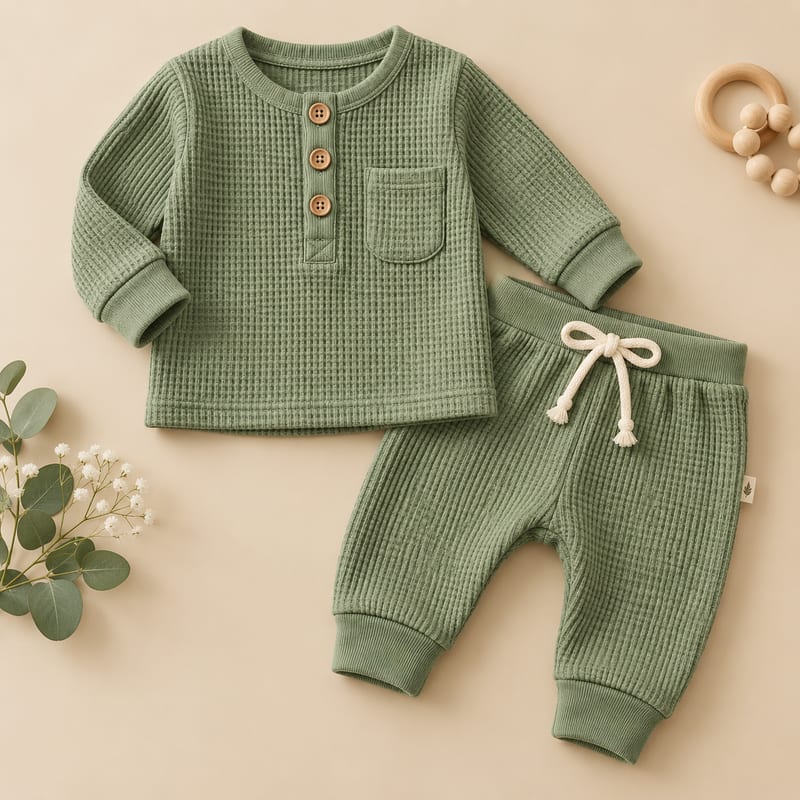
Knees take the wear, and gaps appear between tops and trousers as they reach forward. Two-piece sets with ribbed cuffs, such as the Sage Waffle-Knit Henley & Jogger Set, cover the knees and let you change one half at a time, and a bodysuit underneath closes the gap at the back.
Long frocks and kurtas can catch under the knees and tip a crawler onto their face.
Pulling up and cruising, often around 9 to 12 months
Now you can put trousers on while they stand holding the sofa, which ends many of the battles of the rolling stage. Bare feet grip best on the floor, while slippery socks and oversized footed suits can make them slide on marble and tile.
Anything that dangles, from tablecloths to long ties and dupattas on chairs, becomes something to grab and pull.
Walking, often somewhere between 9 and 18 months
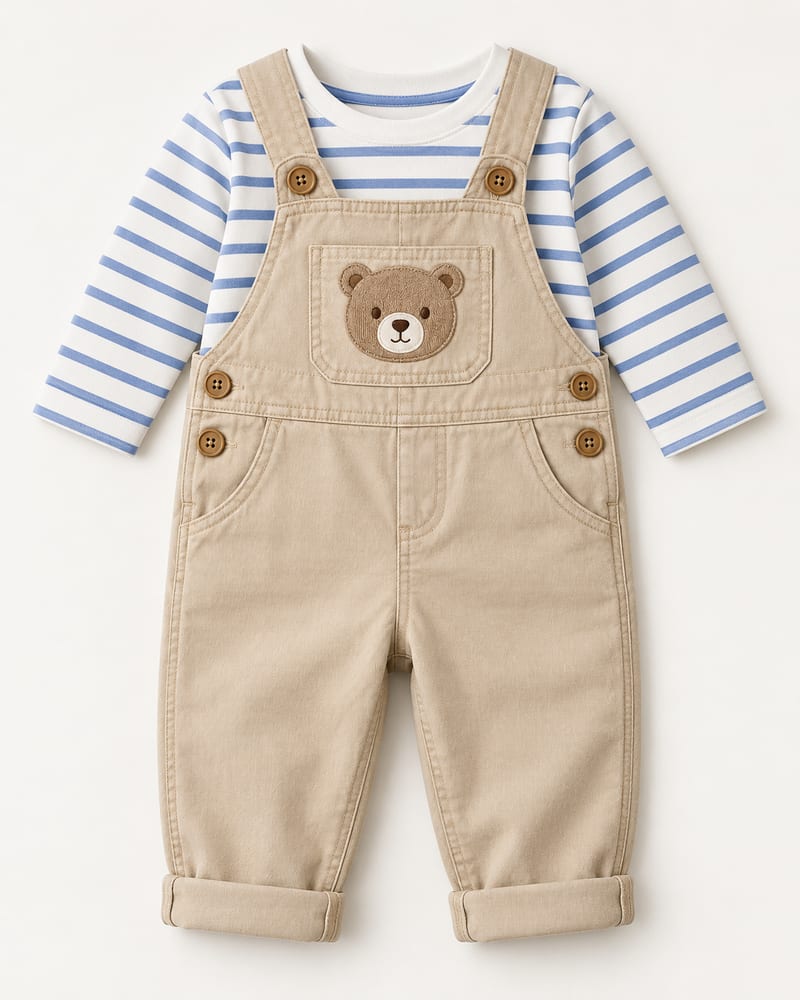
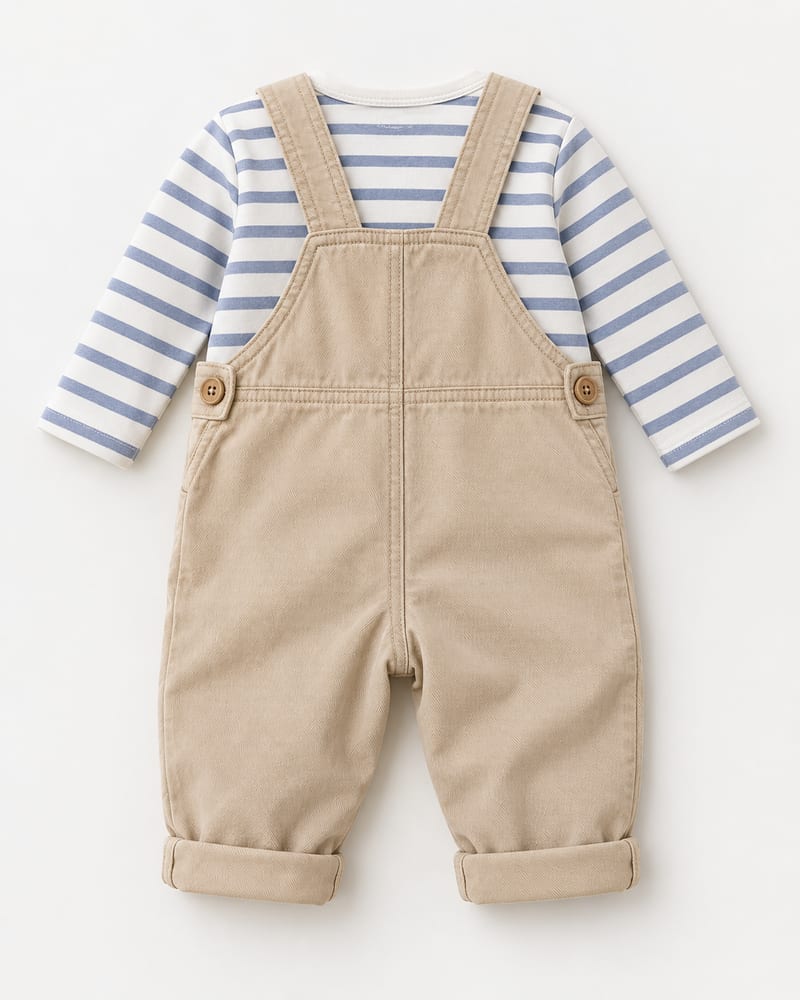
Trouser length becomes a safety question, because hems that drag can trip a new walker. Turned-up hems like those on the Beige Teddy Dungarees & Striped Top Set help, and joggers with cuffs stay out from under the feet.
Shoes are for walking outside; at home, bare feet help them balance.
Toddlers who want to help, often from around 18 months
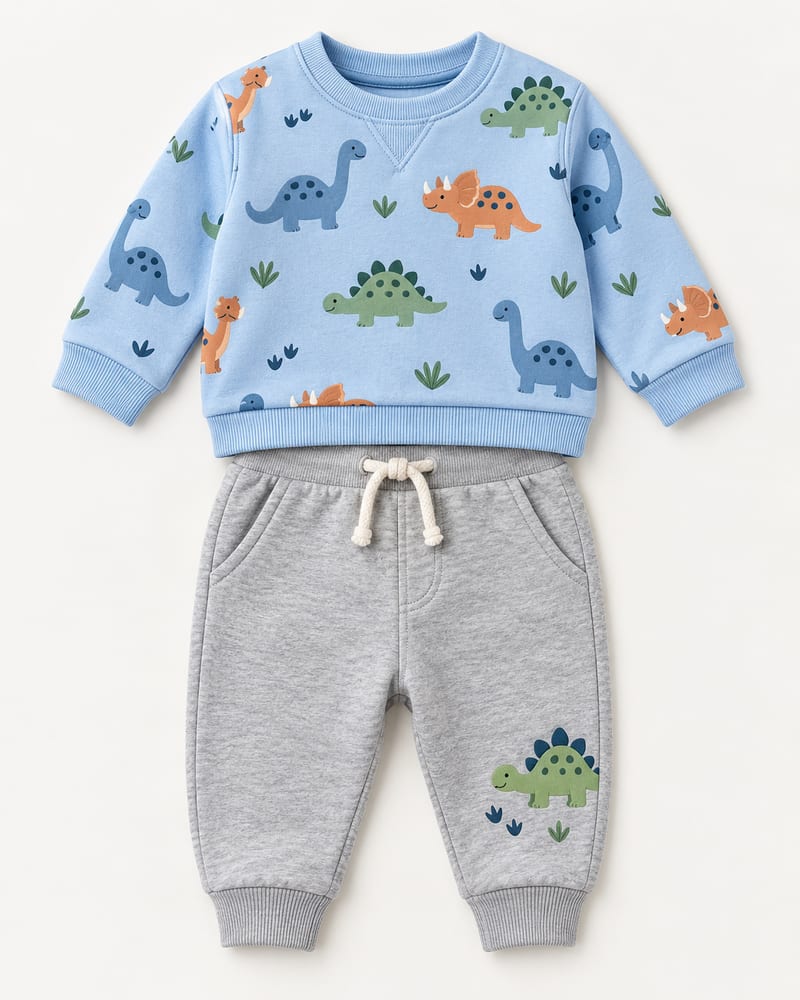
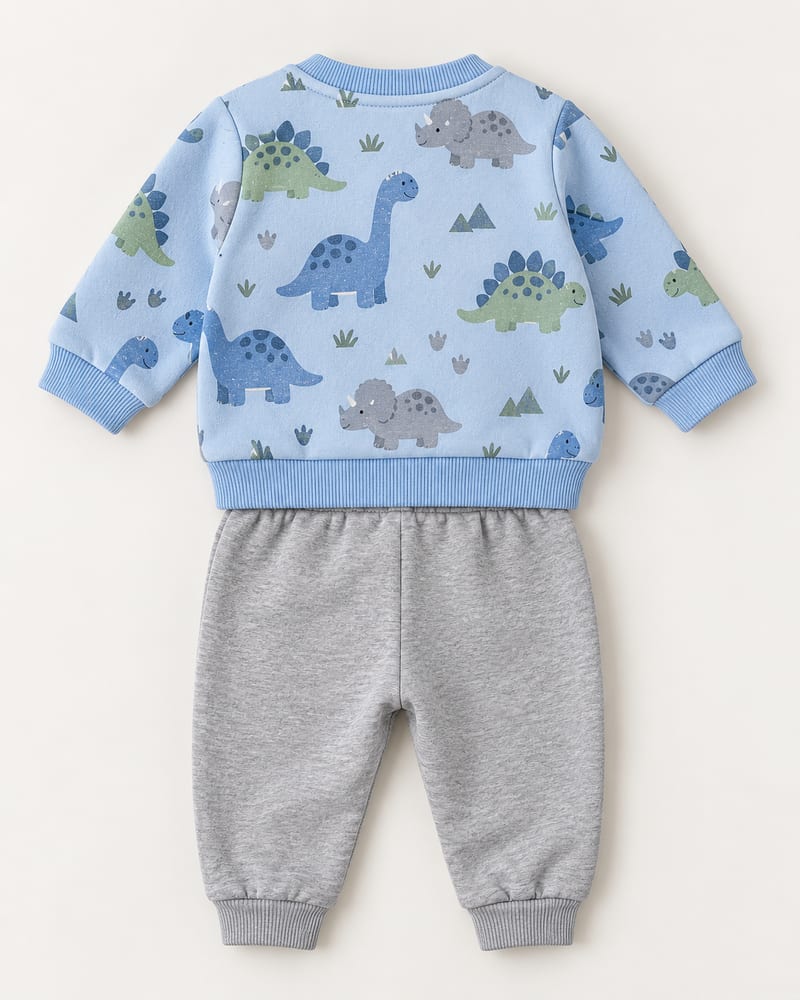
Undressing comes first, then pulling on simple things. Elasticated waists, wide necks and clear fronts, as on the Sky Blue Dinosaur Sweatshirt & Grey Jogger Set, make it easier for them to take part. Potty training, when it comes, changes the wardrobe again, with fewer snaps and more pull-on trousers.
You can find every stage on our growing baby page.
Quick answers
At what age do babies need different clothes for crawling?
It’s the stage, not the age. Once your baby starts crawling, knees and waistbands matter more, so switch to trousers or joggers with cuffs and tops that don’t ride up.
Do babies need shoes when they start walking?
Not indoors. Bare feet help with balance on a safe floor, and shoes are for when they walk outside.
When can my baby start helping to get dressed?
Many babies push an arm into a sleeve or lift a foot around their first birthday. Pulling clothes off usually comes before putting them on.
My baby skipped crawling. Does that change what they should wear?
Not much. Dress for what they are doing: bottom shufflers wear out the seat of their trousers, and early walkers need hems that don’t trip them.