Style & colour
Colours and prints that hide everyday baby stains
Milk, dribble, food and dust each show up on different colours. Which shades and prints hide everyday baby marks best, and which show every single spill.
No colour hides everything
Every stain has a colour, so every fabric colour hides some marks and shows others. Dried milk and spit-up leave pale, chalky patches. Dribble darkens fabric while it is wet. Weaning foods such as haldi-rich daal, carrot and tomato leave orange and yellow. Floors, prams and courtyards leave grey dust. Knowing which marks your baby makes most often at each stage tells you which colours will look cleanest for longest.
What each colour shows
- White and cream: show food, dust and yellowing, but hide dried milk well. They are also the easiest to freshen in the sun.
- Pale pastels: show nearly everything, especially orange food stains and grey dust.
- Navy, charcoal and black: hide food and dust but show dried milk, spit-up and white fluff.
- Mid-tones such as sage, heather grey, oatmeal and dusty rose: the best all-rounders, because most stains are neither very light nor very dark next to them.
- Mustard and rust: surprisingly good at hiding orange and yellow food marks.
Prints hide more than plains
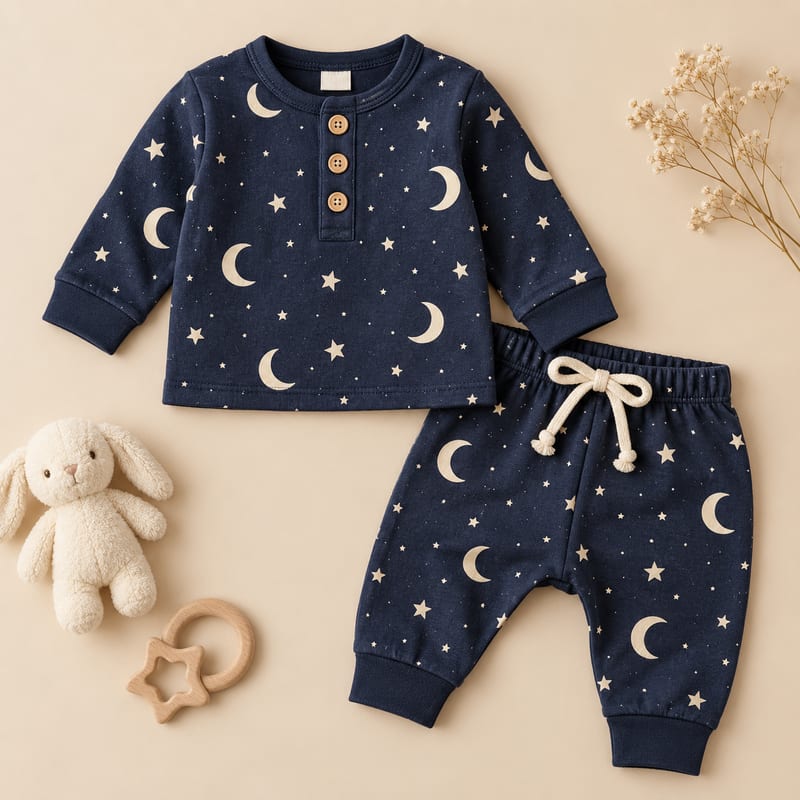
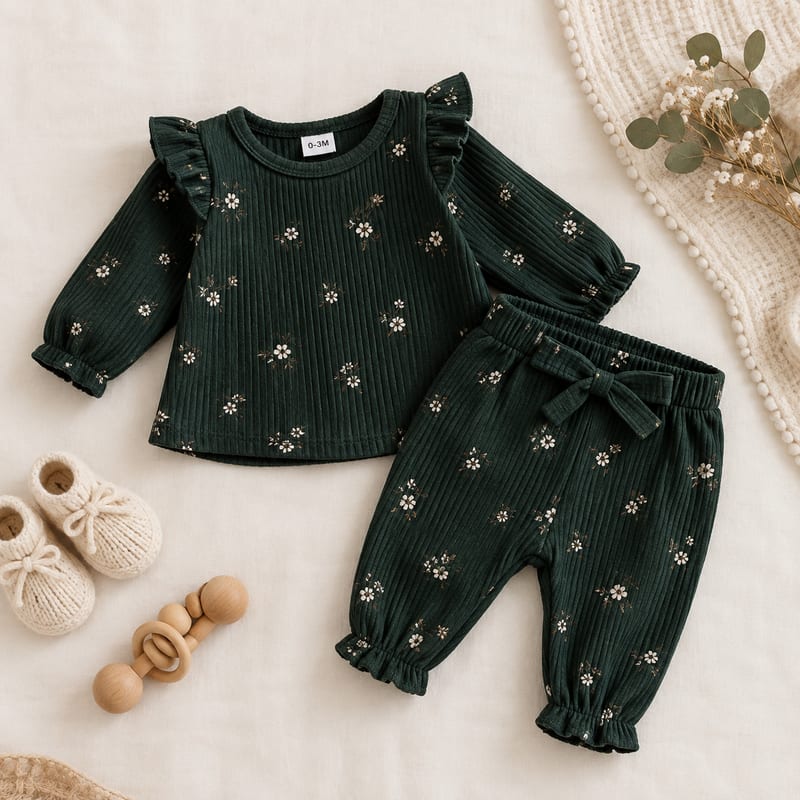
A small, all-over print breaks up the surface, so a spot of food or a splash of milk has somewhere to hide. Prints with two or three colours on a mid or dark ground are the most forgiving. The Navy Moon & Stars Henley & Jogger Set is a good example: the scattered moons and stars disguise the pale marks that plain navy would show. The cream flowers on the Forest Green Floral Ruffle Top & Bow Trousers do the same job on a deep green ground.
Large, single motifs on a plain background are the least forgiving, because a stain next to the motif draws the eye straight to it. Stripes sit in between: busy enough to hide small marks, but a stain across a pale stripe still shows.
Match the colours to the stage
- 0–6 months: milk and spit-up. Mid-tones, soft prints and cream hide these; navy and charcoal show them. Keep dark plains for when a muslin is on your shoulder anyway.
- 6–12 months: weaning. Orange and yellow foods show on pastels, so mid-tone prints and warm colours pay off on top, where most food lands.
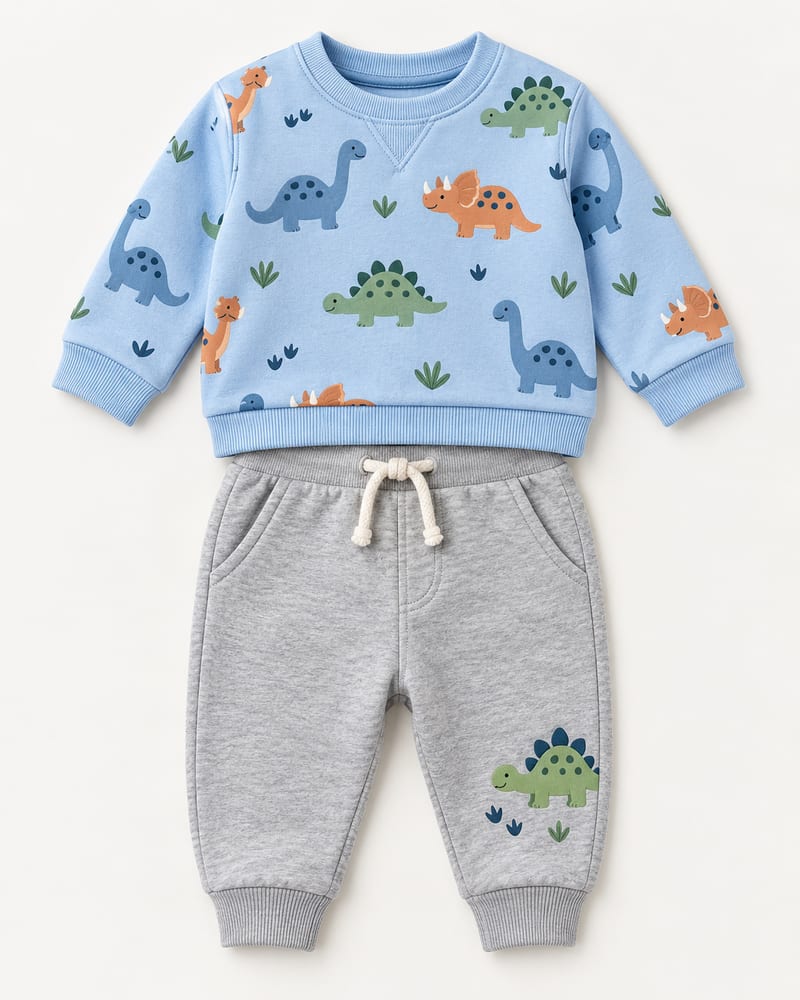
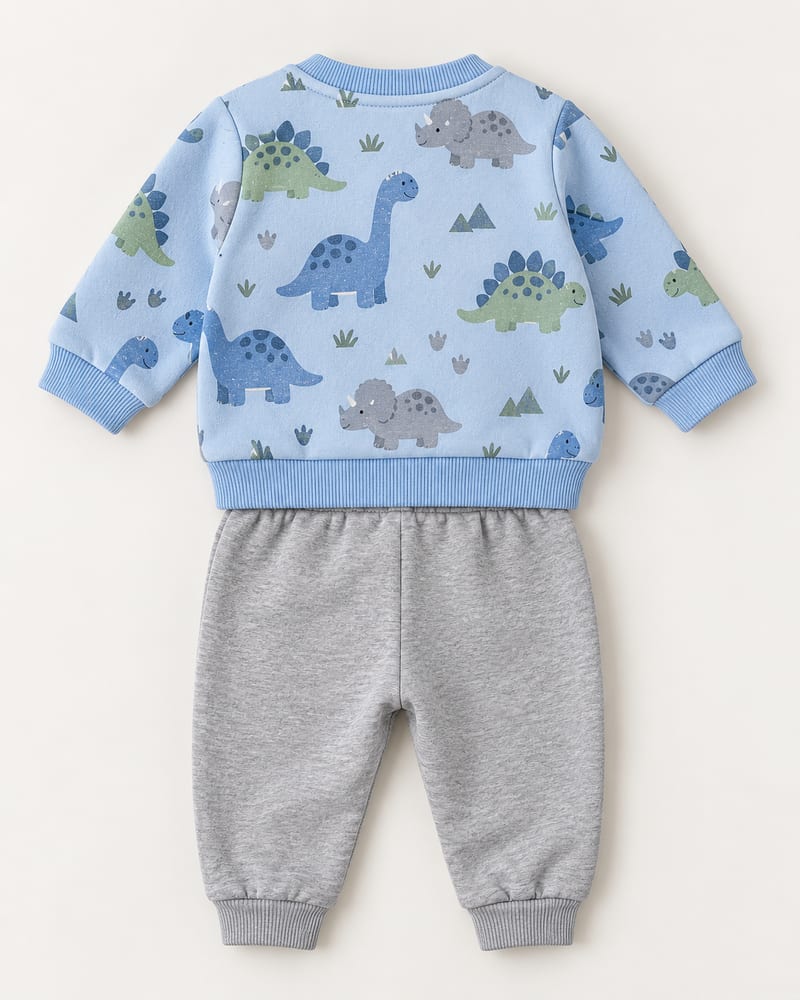
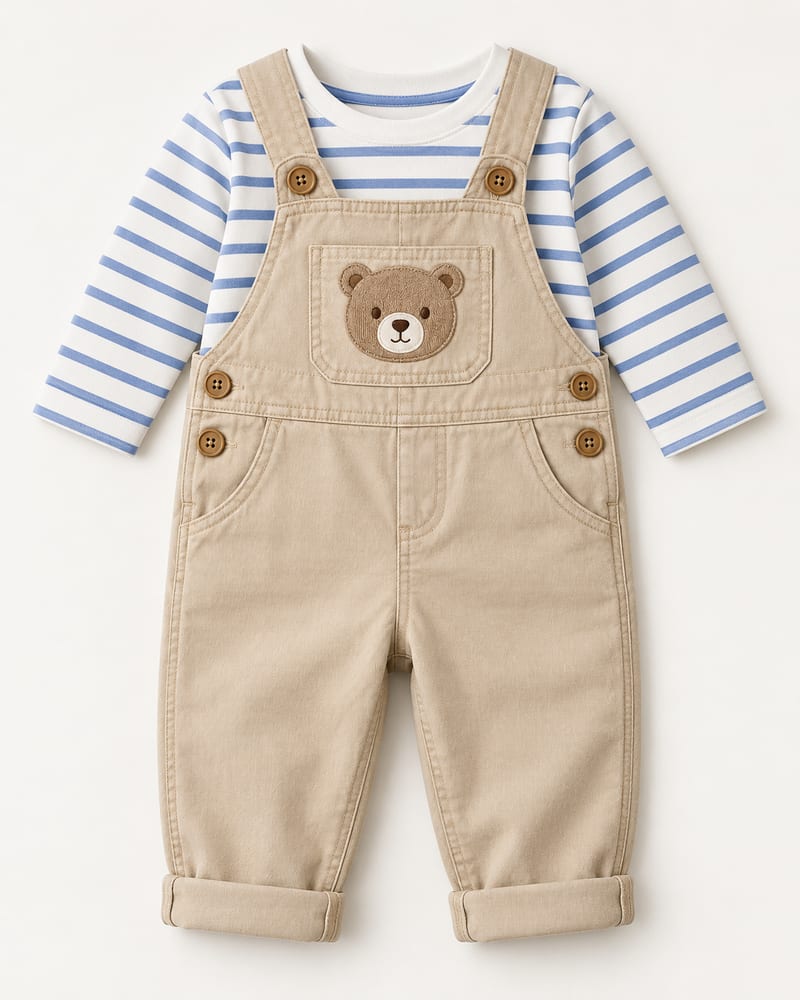
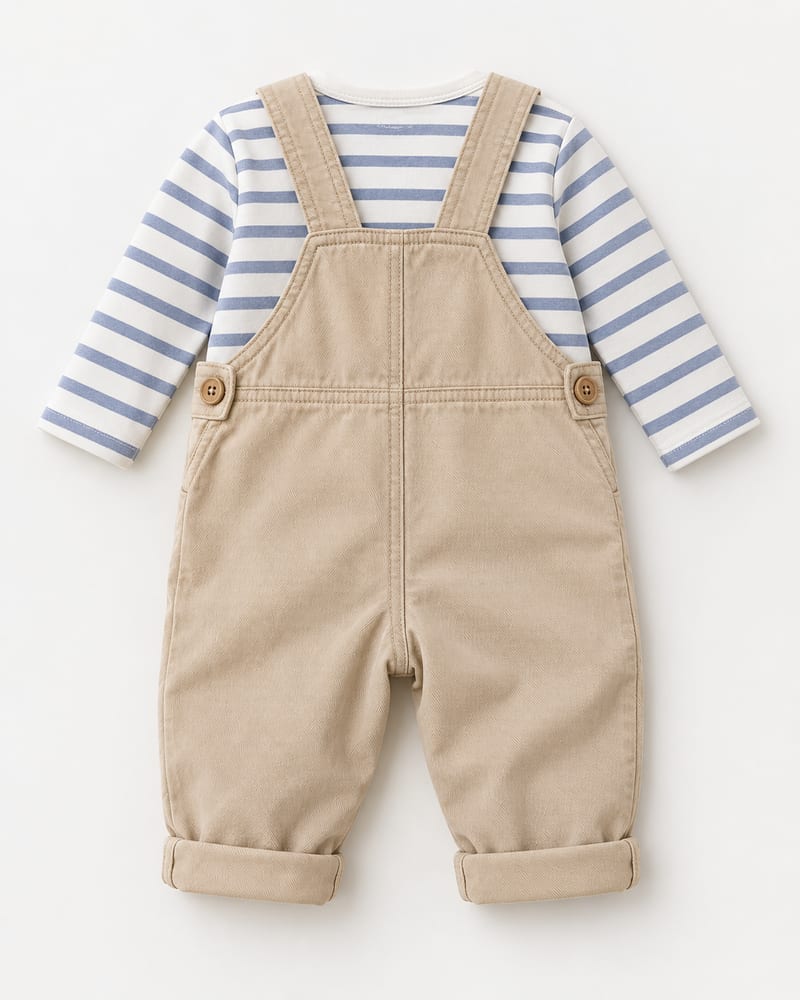
- 12–24 months: crawling, walking, dust and grass. Darker and textured bottoms take the floor. The Sky Blue Dinosaur Sweatshirt & Grey Jogger Set puts the print on top and grey below, and the twill of the Beige Teddy Dungarees & Striped Top Set is forgiving of floor dust.
Where stains land
Most marks land on the chest, the cuffs and the knees. That makes the top of an outfit the place for your most forgiving colour or print, and the reason a bib does so much work. It also means that a pale bottom with a patterned top often stays presentable longer than the other way round, at least until your baby crawls. Once they do, knees and shins take much of the wear, so darker or textured bottoms become the priority, while the top stays a forgiving mid-tone for mealtimes. Keeping bibs in the same palette as the outfits means they look like part of the look rather than an afterthought.
Keep a few pale pieces anyway
None of this means avoiding light colours. Pale pieces photograph beautifully and suit summer, so keep them for visits, photos and nights, and use forgiving colours for busy days. For getting marks out once they happen, our washing guide covers milk, food and nappy stains. Our baby sets mix prints and mid-tones, and our post on whether charcoal is too dark for a baby looks at dark colours in more detail.
Quick answers
What colour baby clothes hide stains best?
Mid-tones such as sage, heather grey, oatmeal and dusty rose, especially in a small all-over print. They sit between light stains like milk and dark stains like food.
Do dark baby clothes hide milk stains?
No, dried milk and spit-up leave pale marks that show on navy, charcoal and black. Dark colours are better at hiding food and dust.
Are white baby clothes a bad idea?
Not necessarily. White shows food and dust but hides dried milk, and it is easy to freshen in the sun. Keep it for nights, visits and photos rather than messy mealtimes.
Do textured knits hide stains better than smooth fabric?
A little. Waffle, rib and cable textures break up the surface, so small marks are less obvious than on a smooth, plain fabric in the same colour.