Style & colour
How to build a colour palette for your baby’s wardrobe
Choosing three or four colours that all go together, so any top works with any bottom, fewer outfits clash and a small baby wardrobe goes further.
Why a palette makes dressing easier
A colour palette is simply a short list of colours you keep coming back to. When most of the drawer shares three or four colours, almost any top goes with almost any bottom, and getting dressed stops being a decision. That matters at seven in the morning when a nappy has leaked through and you need a clean outfit in under a minute.
It also makes a small wardrobe go further. Two tops and two pairs of joggers in colours that all work together give you four outfits instead of two fixed sets. Photos look calmer too, because nothing on the baby fights with anything else.
Start with two neutrals
Neutrals are the colours that do the quiet work: cream, oatmeal, beige, grey, charcoal and navy. Pick two as your base. Most bottoms, sleepsuits and layers can come in these, because they sit comfortably with nearly every accent colour.
Hold your two neutrals next to each other in daylight before you commit. Cream with oatmeal, or grey with navy, look at ease together; cream beside a cold, blue-toned grey can make the cream look grubby. If you expect a mix of warm and cool pieces from gifts, oatmeal and navy is a forgiving pair.
Add one or two accent colours
Accents are the colours people notice: sage, dusty rose, sky blue, forest green, mustard or rust. One accent keeps things very simple; two gives more variety. Much beyond three and the palette stops doing its job.
Choose accents that look good next to each other as well as next to your neutrals, because sooner or later they will end up on the same baby. Sage and dusty rose are both soft and slightly greyed, so they sit happily together. Sky blue and dusty rose can look like two different wardrobes unless a neutral stands between them.
Palettes that work for babies
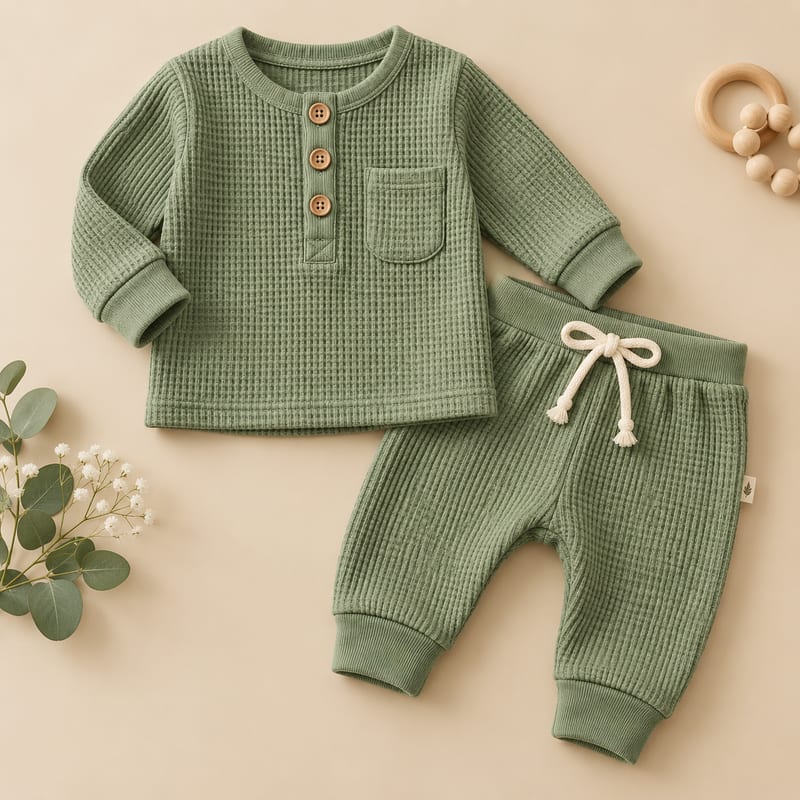
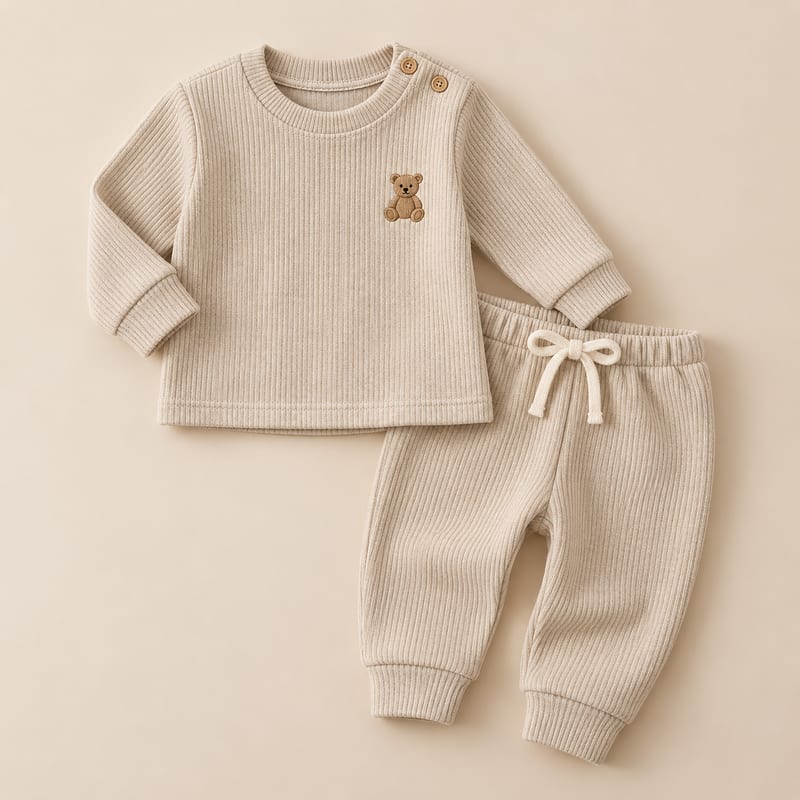
- Cream, oatmeal and sage: calm and earthy, and easy to add to. The Sage Waffle-Knit Henley & Jogger Set and the Oatmeal Teddy Ribbed Top & Jogger Set belong in the same drawer and swap halves easily.
- Oatmeal, dusty rose and sage: soft and warm, and a good home for floral prints.
- Grey, navy and sky blue: cool and crisp, and stripes and star prints fit straight in.
- Charcoal, cream and forest green: deeper and richer, which suits winter and evening visits.
Where prints fit in
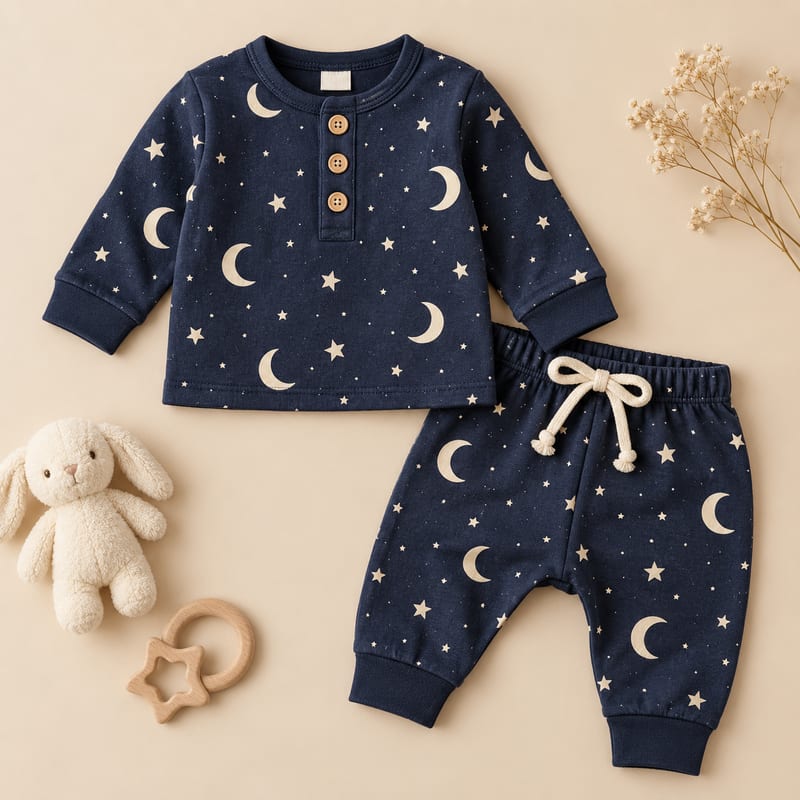
A print belongs in your palette if at least one of its main colours is already there. The Navy Moon & Stars Henley & Jogger Set brings navy, so its top works with grey or cream bottoms, and its joggers work under a plain cream or sky-blue top. A print with none of your colours in it can still be lovely, but it will usually only be worn as its own set.
If you want to understand why some combinations look right and others don’t, it helps to know the colour-matching basics: tonal, neighbouring and contrasting colours.
Building it over time
You don’t need to plan every piece before the birth. Start with your neutrals in the sleepsuits and bodysuits you need anyway, then let accents arrive as sets and gifts. When relatives send clothes in colours outside your palette, treat them as an extra accent for that size rather than a problem. Our post on moving up a size and what to count helps you decide how many pieces each colour needs to cover.
Because each size only lasts a few months, you can also shift the palette as your baby grows: soft pastels for the first months, richer colours by their first winter. Browse our baby sets with your chosen colours in mind, and find more ideas on the style and colour blog.
Quick answers
Won’t sticking to a palette make my baby’s clothes look boring?
Not if you vary texture and print. A waffle knit, a ribbed set and a small print in the same three colours look quite different from each other, and one brighter accent piece stops the drawer feeling flat.
What if family give us clothes that don’t fit the palette?
Wear them, and pair them with your neutrals, which go with almost anything. A bright gift with cream or grey bottoms still looks put together, and it may become the accent colour for that size.
How many colours should a baby wardrobe have?
Two neutrals and one or two accents per size is plenty. That gives enough variety while keeping almost every top and bottom interchangeable.
Does a colour palette work for eastern wear too?
Yes. If your baby’s everyday palette is cream, sage and dusty rose, a kurta or frock in one of those colours for Eid or a wedding will sit naturally beside the rest of their wardrobe and look planned in family photos.