Washing & care
How to hand-wash baby clothes properly
A step-by-step method for washing baby clothes by hand in a bucket: dissolving detergent, soaking, rinsing until clear and drying without stretching.
When hand-washing makes sense
Many families hand-wash their baby’s clothes, especially in the first months: loads are small, the machine may be busy with the family’s washing, and it feels gentler. It is also the best way to wash delicate knits, and useful during load-shedding, while travelling, or when the machine breaks down. Done properly, it gets baby clothes just as clean as a machine.
Done badly, with too much detergent and too little rinsing, it leaves residue that makes clothes stiff and can bother a baby’s skin. The difference is almost entirely in the rinsing.
What you need
- Two buckets or basins: one for washing, one for rinsing.
- A mild liquid detergent, or powder dissolved completely in water first.
- A soft old toothbrush for the collars and cuffs of woven pieces.
- A clean towel for pressing out water.
- A drying rack or line, and a flat surface for knits.
- Gloves if detergent dries out your hands.
Step by step
- Sort: whites and pale pieces first, colours next, anything heavily soiled last or separately.
- Fill the basin with lukewarm water, not hot, and dissolve the detergent completely before adding clothes.
- Pre-treat stains with a drop of detergent rubbed in with your fingertips.
- Push the clothes under and let them soak for 10 to 15 minutes.
- Swish and squeeze each piece gently. For stubborn marks on plain fabric, rub the fabric against itself; don’t scrub knits with a brush.
- Lift the clothes out, squeeze gently, and pour away the dirty water.
Rinse more than you think
Rinsing is where hand-washing usually falls short. Fill the basin with clean water, swish and squeeze the clothes, drain, and repeat. Most loads need two or three rinses before the water stays clear and no foam appears when you squeeze a piece.
If you still see suds after three rinses, you used too much detergent; use less next time. A small splash of white vinegar in the last rinse helps if your water is hard and clothes tend to dry stiff.
Getting the water out without stretching
Don’t wring baby clothes, and especially not knits: twisting stretches the fabric and pulls it out of shape. Instead, press the water out with flat hands against the side of the basin, then lay the piece on a clean towel, roll the towel up and press. Unroll, give it a shake, and hang it or lay it flat.
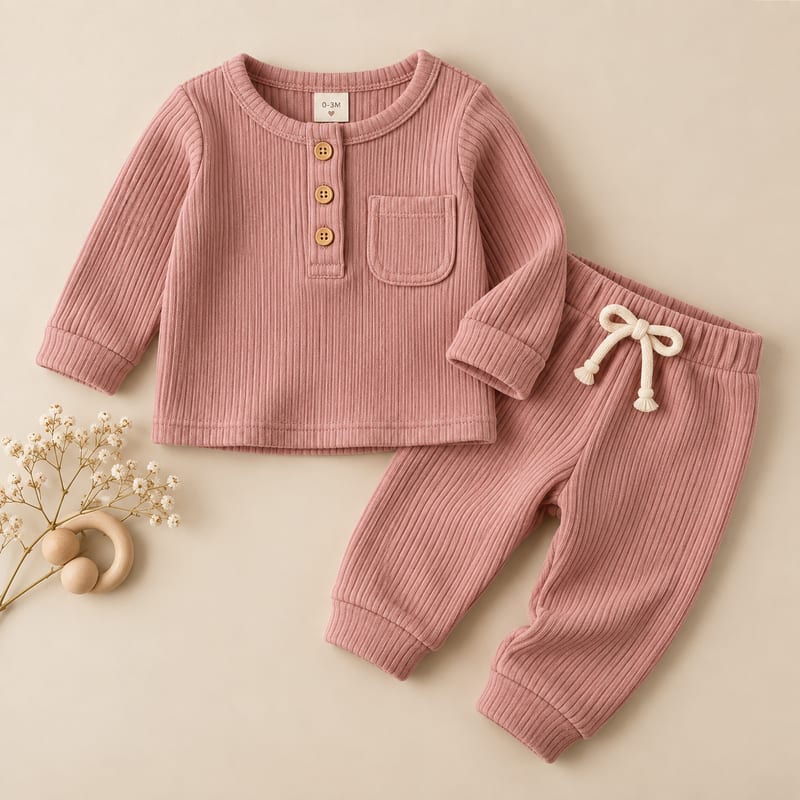
Knitted sets such as our Dusty Rose Ribbed Henley & Jogger Set are best dried flat, gently pulled back into shape, with cuffs and waistbands pushed back to size, unless the care label says otherwise. See stopping ribbed baby knits stretching for more.
Common mistakes
- Water too hot: it can shrink knits and set milk and food stains.
- Too much powder: undissolved grains stay in the folds and dry as white marks.
- Leaving coloured and white pieces soaking together for hours.
- Hanging heavy wet knits by the shoulders, which stretches them.
- Leaving buckets of water standing where a crawling baby can reach them. Empty them straight away, and keep laundry products out of reach too.
A quick evening routine
In the newborn months, a small hand-wash every evening often works better than a big weekly wash. Keep a lidded bucket in the bathroom for the day’s milky vests and bibs, soaking in cold water. Once your baby is asleep, tip out the soak water, wash the few pieces in fresh lukewarm water with a little detergent, rinse twice, press them in a towel and hang them on a rack. By morning most will be dry, and nothing has had time to stain or smell.
Hand-washing and a machine aren’t either-or. Many parents hand-wash knits and delicate pieces and machine-wash sturdy vests, sheets and towels. Our guide on how to wash baby clothes covers detergent and temperature for any method.
Quick answers
How long should I soak baby clothes?
Ten to 15 minutes is enough for everyday washing. Longer soaks are for stains, and whites and colours should soak in separate buckets.
Can I use a washing bar for hand-washing?
For spot-scrubbing collars and cuffs, yes. For washing whole garments, a liquid or fully dissolved powder rinses out more easily.
Is hand-washing more hygienic than a machine?
Not necessarily. Both get clothes clean if you use the right amount of detergent, rinse well and dry fully.
How do I dry hand-washed knits quickly?
Roll them in a towel to remove as much water as possible, then lay them flat in a shaded, airy spot and turn them over once.