Washing & care
Keeping white baby clothes white without harsh bleach
A routine for white vests, polo tops and sleepsuits: sorting, pre-treating, soaking and sun-drying so whites stay bright without chlorine bleach.
Why whites go dull
White baby clothes rarely go from bright to grey because of one stain. They fade slowly, a little every wash. Body oils and milk residue build up in the fibres; small amounts of dye drift across from coloured clothes in the same load; detergent that isn’t fully rinsed out attracts dirt; and overloaded machines leave clothes sitting in their own grey water.
Water plays a part too. Many homes in Pakistan use tank or bore water with a lot of minerals, and some with iron in it. Hard water makes detergent work less well, and iron can leave a yellowish or rusty tint on whites over time. You can’t always change the water, but you can work around it.
Wash whites only with whites
- Keep a separate basket for white and very pale pieces, and wash them together, not with light colours.
- Don’t add a new coloured piece just this once. It only takes one to tint the lot.
- Leave room in the drum. A machine packed to the top can’t rinse properly.
- Use the right amount of detergent. Too little leaves dirt behind; too much leaves residue.
- Add an extra rinse if your machine has one, especially with powder or hard water.
Pre-treat before stains set
Most of the difference between bright and dingy whites comes from what you do before the machine. Milk marks, drool on necklines and food on the chest need a cold rinse and a drop of liquid detergent before they go in, because a stain that survives one wash is much harder to shift in the next.
A monthly brightening soak
Once a month or so, soak your whites for a few hours or overnight in water as warm as the labels allow, with an oxygen-based stain remover dissolved in it, following the pack. Then wash as usual. This lifts the build-up that normal washes leave behind and brings back a lot of brightness without chlorine bleach, which weakens elastic and can turn protein stains more yellow.
Check labels before soaking anything with prints, appliqué or a coloured trim, and leave wool out entirely.
Let the sun help
Strong sunlight is a free and gentle whitener. It fades the last traces of many food and milk stains and leaves whites smelling fresh. Hang white pieces in direct sun, and bring them in once dry rather than leaving them out all day, when they can stiffen. Coloured clothes need different treatment, because strong sun can fade them.
White parts of two-colour pieces
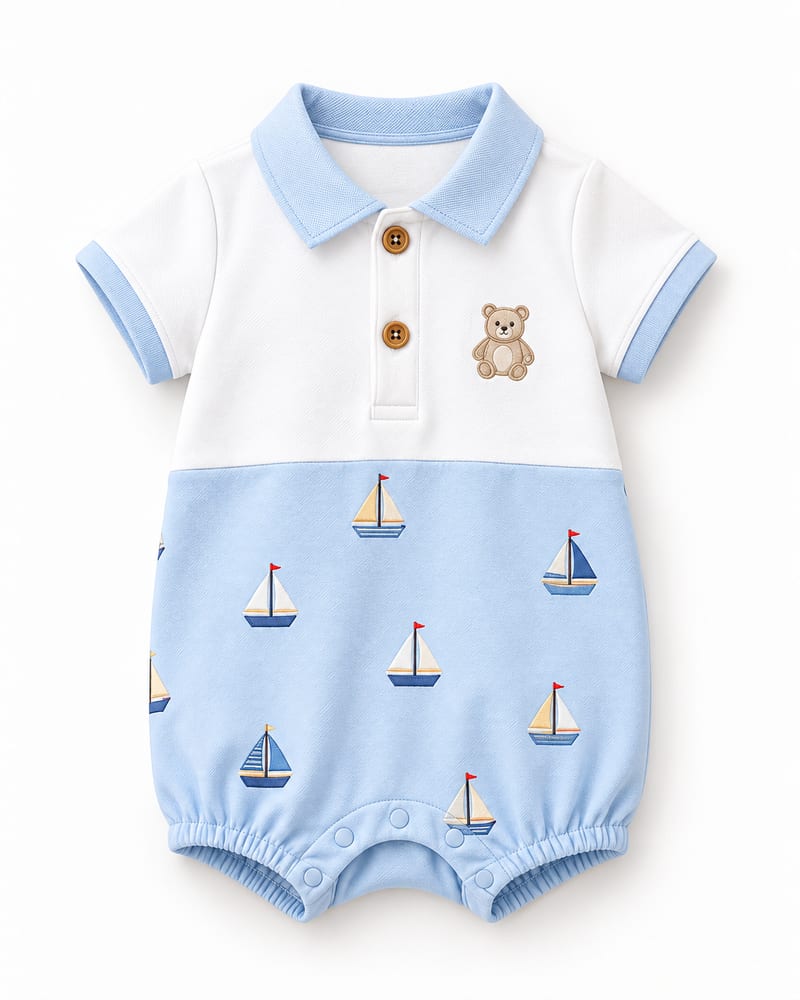
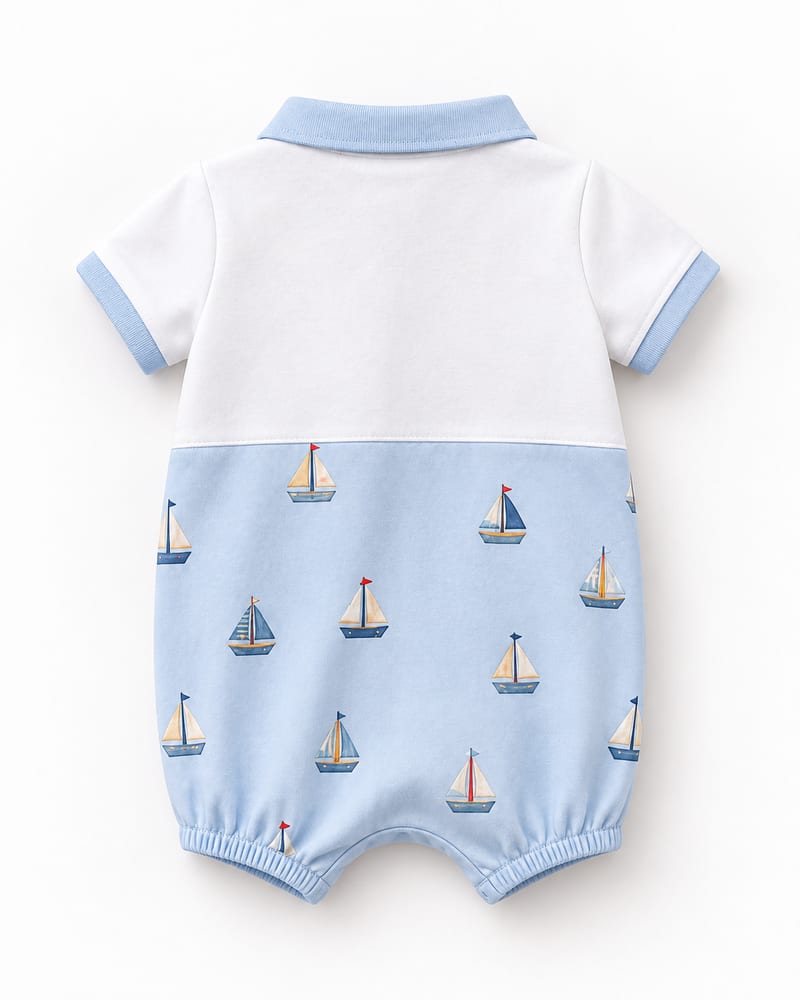
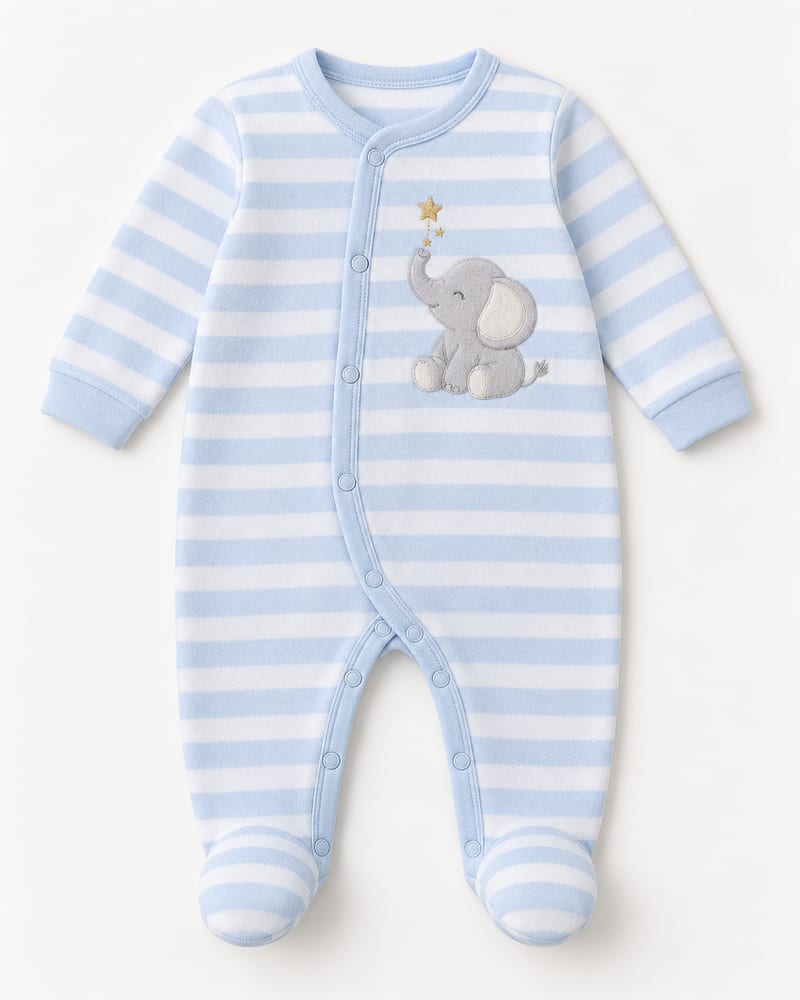
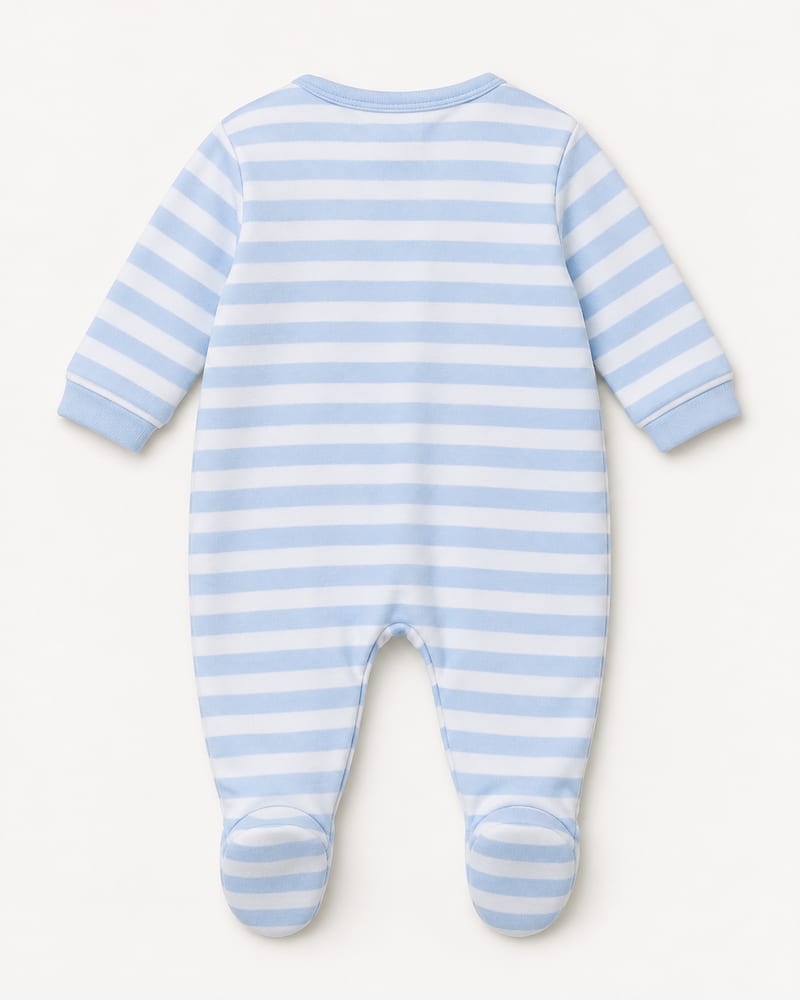
Many baby clothes are mostly white with a coloured element: the white polo top of the Sky Blue Sailboat Polo Romper, or the white stripes of the Sky Blue Striped Elephant Footed Sleepsuit. These can’t go through anything harsh. Wash them with light colours in cool water, pre-treat stains on the white parts carefully, and use only colour-safe products after testing on a hidden seam.
Cream and ivory are not white at all and need gentler handling.
Hard or iron-rich water
- If whites turn gradually yellow or orange-tinged, and the water leaves marks on your taps and buckets, minerals or iron are the likely cause.
- Use a little more detergent than for soft water, following the pack’s hard-water guidance, and always rinse well.
- For small rust-coloured spots on white fabric, lemon juice and salt in the sun often help; rinse well afterwards.
- Avoid chlorine bleach on iron marks, which can darken them.
- Our guide on how to wash baby clothes covers the everyday basics of detergent and temperature.
Quick answers
Is neel good for baby whites?
Traditional laundry blue can make whites look brighter, but it doesn’t clean them, and too much leaves blue streaks. Use it only as a light finishing rinse on pure white pieces.
Should I boil white baby clothes?
Boiling was once common but is hard on elastic, snaps and prints and can shrink knits. A warm soak with an oxygen-based stain remover and a sunny dry works well without the risk.
Why do whites go grey rather than yellow?
Grey usually means dirt and dye from other clothes settling back onto them, often from overloading or washing with colours. Yellow usually means body oils, milk or minerals in the water.
How often should I do a whitening soak?
Once a month is plenty for most families, or whenever whites start to look dull. More often than that is rarely needed.