Washing & care
How to get breast milk and formula stains out of baby clothes
Why milk and formula stains need cold water first, how to pre-treat the fat and protein, and what to do when a stain only shows after drying.
Why milk stains behave the way they do
Breast milk and formula are a mix of protein, fat and sugar, and each part needs slightly different handling. Protein sticks to fabric when it is heated, which is why a hot rinse can fix a milk stain instead of removing it. The fat leaves a faint greasy outline, and the sugars slowly turn yellow or brown over the following weeks, especially on white and pale pieces.
Formula usually leaves a more visible cream or beige mark than breast milk, because it is thicker and carries more added fat, and in warm weather it starts to smell sour within hours. So the order matters: cold water first to loosen the protein, something that cuts grease for the fat, and only then a normal wash.
Straight after the spill
- Blot pooled milk with a muslin rather than rubbing it, so you don’t push it deeper into the knit.
- Turn the piece inside out and run cold water through the back of the stain. This pushes the milk out the way it came in, instead of dragging it through the rest of the fabric.
- If you can’t rinse it yet, drop the piece into a bowl of cold water until you can. A dried milk stain is harder to shift, and one that dried in a hot room or in the sun is harder still.
- During the newborn weeks, keep a small lidded bucket of cold water in the bathroom so milky vests and sleepsuits can go straight in to soak. Empty it at the end of each day.
Pre-treating before the wash
Rub a drop of liquid detergent into the mark with your fingertips and leave it for 10 to 15 minutes. For formula, add a very small drop of plain washing-up liquid, which is made to lift grease, and rinse it out before the main wash so it doesn’t foam in the machine.
Enzyme (biological) detergents are designed to break down protein and work well on milk. If the detergent you already use suits your baby’s skin, there is no need to change it. If your baby has eczema or very sensitive skin, ask your doctor what they recommend before trying something new.
For a stubborn mark, soak the piece for an hour, or overnight, in cool water with a scoop of detergent or an oxygen-based stain remover, following the pack. Then wash as usual at the temperature on the care label.
Check before you dry
Look at the stain in daylight after the wash, while the piece is still damp. If you can see an outline, treat it and wash again. Don’t tumble dry or iron until it has gone, because heat sets whatever is left.
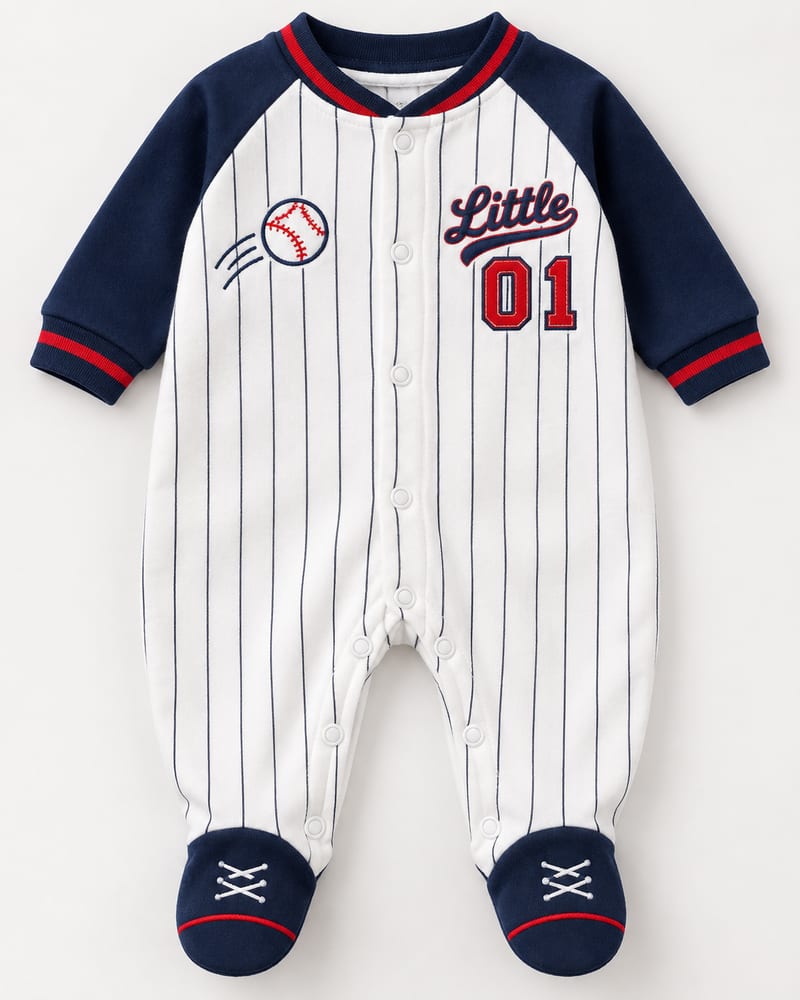
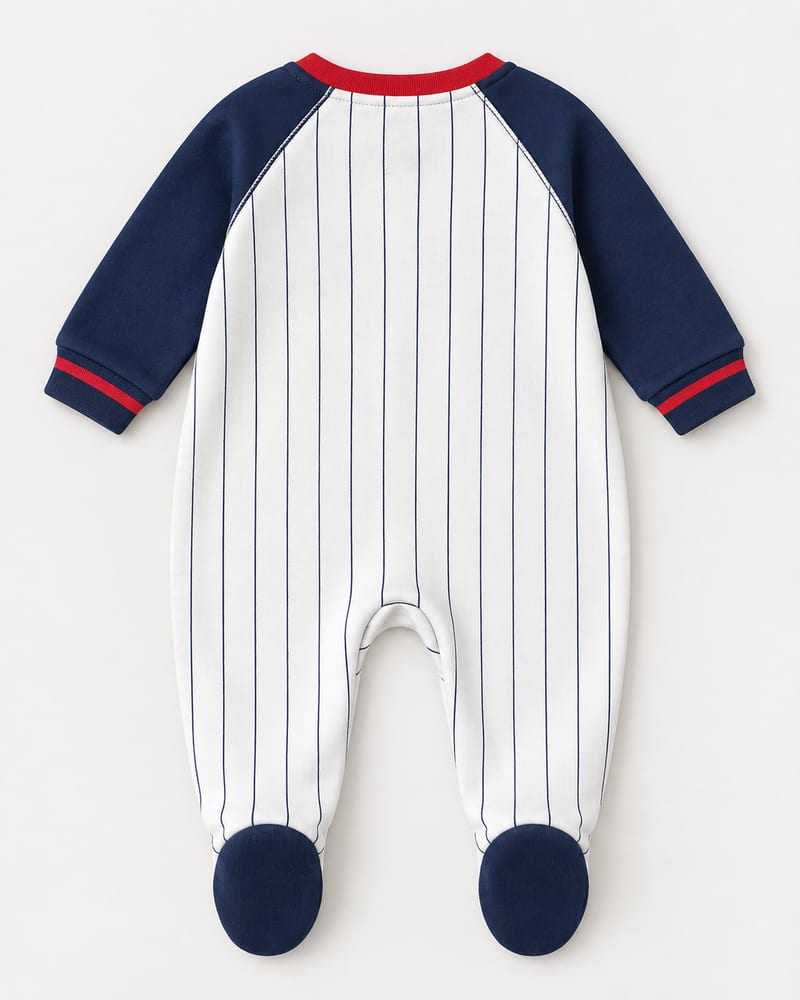
Drying white and light pieces in the sun helps fade a last faint shadow. Coloured pieces are better dried in the shade with the treatment repeated instead, so the colour doesn’t fade unevenly. Pale sleepsuits such as our Ivory Pinstripe Baseball Footed Sleepsuit show milk far more than dark ones, so rinse those the same day.
The stain that appears weeks later
A spot that looked clean after washing can reappear as a yellow patch after a few months in a drawer, because tiny traces of milk sugar and fat oxidise over time. It is the most common reason stored baby clothes come out looking stained. Prevention is simpler: treat milk marks before every wash rather than trusting the machine to find them.
Small habits that save work
- Keep a muslin under the chin and over your shoulder at every feed; it is far easier to wash than a knitted set.
- Don’t overload the machine: milk residue needs water moving freely through the fabric to rinse away.
- Wash milky pieces within a day or two in summer, when sour smells set in quickly.
- For the basics of detergent, temperature and drying, see our guide on how to wash baby clothes, and find more stain help on the washing and care blog.
Quick answers
Does breast milk actually stain?
Fresh breast milk usually rinses out easily in cold water. The trouble starts when it dries and is then washed hot, or left for weeks, when it can turn yellow.
Can I use hot water on a milk stain?
Not at first. Heat sets the protein into the fibres. Rinse and soak in cold water, and use the label temperature only once the stain has gone.
Why does formula leave a darker mark than breast milk?
Formula is thicker and fortified, so it can leave a beige or brownish mark. Treat it the same way, adding a little washing-up liquid to deal with the fat.