Wardrobe planning
Which size will your baby wear next winter?
A step-by-step way to predict your baby’s size for the coldest weeks, so warm clothes bought months ahead fit when you need them, with worked examples.
Why it’s worth working out
Warm clothes are usually bought before the cold arrives: when a relative visits from abroad, when you are ordering for Eid, or simply in October because you want to be ready. The trouble is that a baby can move up a size between the day you buy and the day it gets cold. A sweater that fits in October may be tight at the wrists by January.
A few minutes with a tape measure and a calendar can save you from buying a whole winter wardrobe in the wrong size.
The check, step by step
- Measure your baby’s length or height today, and note their weight.
- Look them up on our size guide and note where they sit in their current size: near the bottom, in the middle or near the top.
- Count the months until the coldest weeks. In most of Pakistan, that is late December and January.
- Remember roughly how long each size lasts: 0–3 and 3–6 months about three months each, 6–12 months about six, and 12–18 and 18–24 months about six each. A baby near the top of a range will move sooner.
- Choose the size they will be wearing in the coldest weeks, not the size they are in when winter starts.
- If they will be between two sizes, buy outer layers and knit sets that go over other clothes in the larger size, and keep base layers and sleepsuits to their current size.
Worked examples
These are illustrations, not rules. Babies grow at their own pace, so always go by your own measurements.
- A four-month-old measured in September, near the top of 3–6 months: by January they are very likely in 6–12 months. Buy warm sets and the outer layer in 6–12 months.
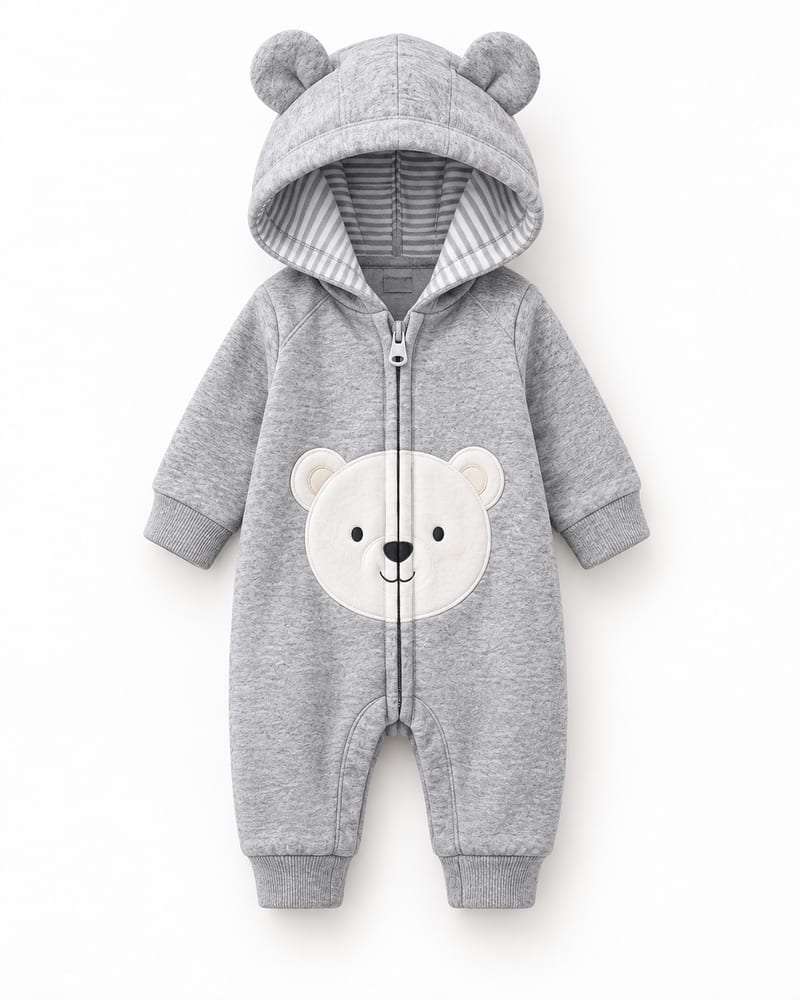
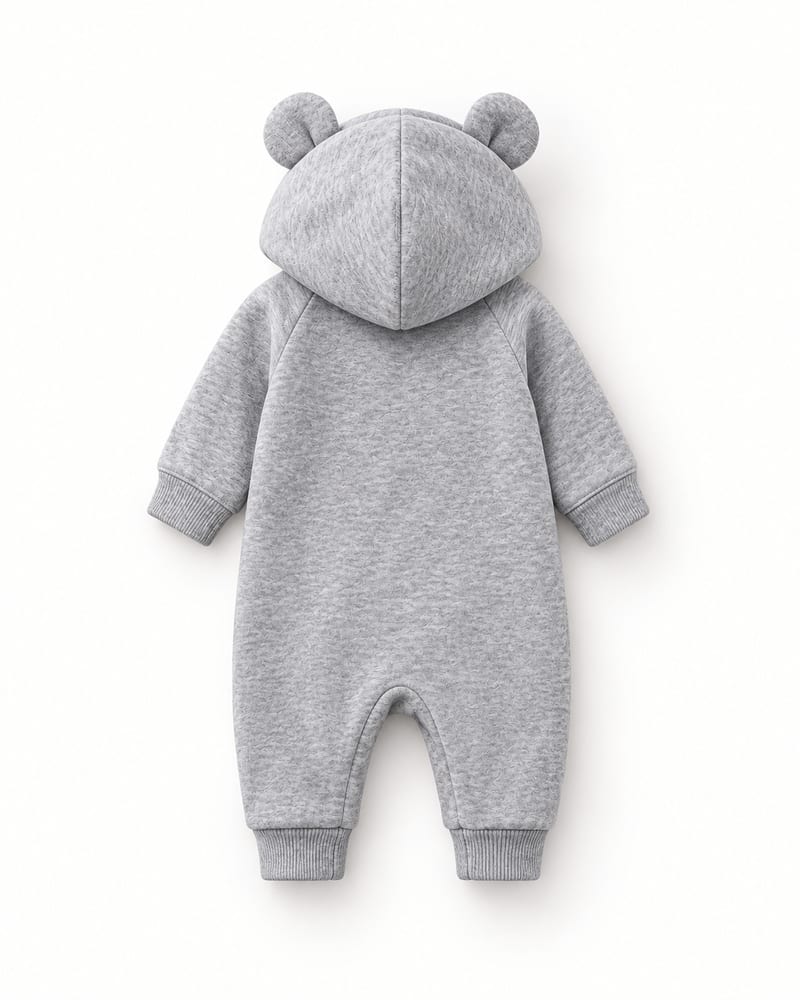
- A nine-month-old measured in October, in the middle of 6–12 months: they will probably still fit 6–12 months in January, but may be near the top of it. Knit sets in 6–12 months are fine; an outer layer such as the Grey Bear Hooded Jumpsuit may be worth buying in 12–18 months for room over clothes.
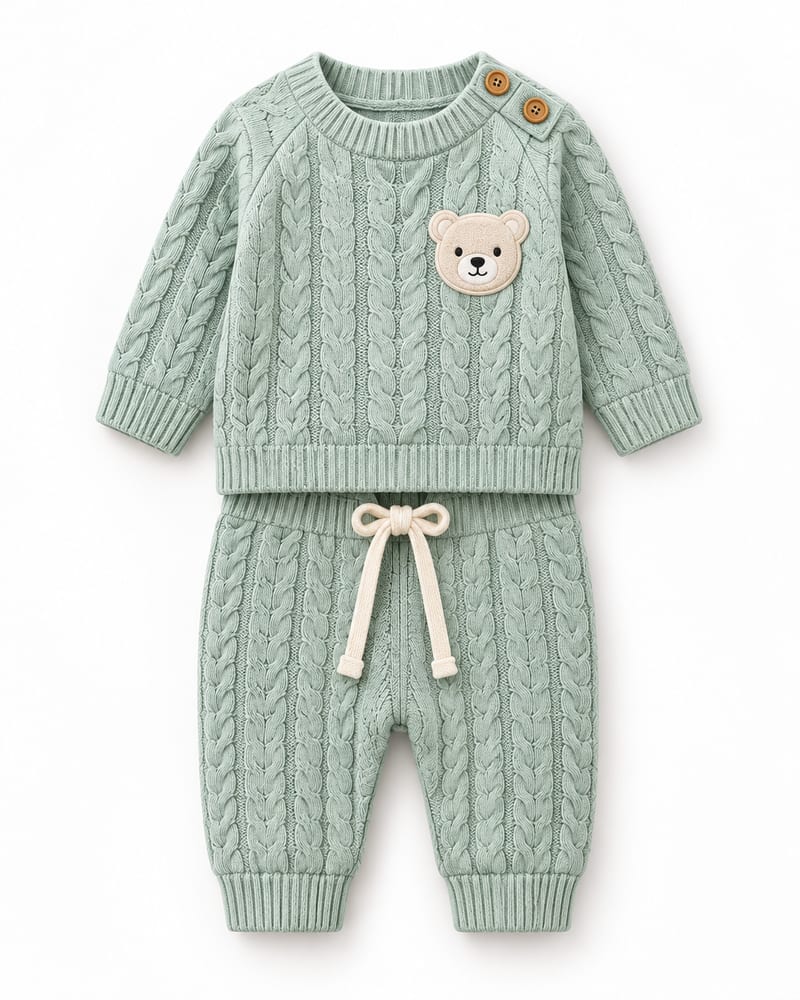
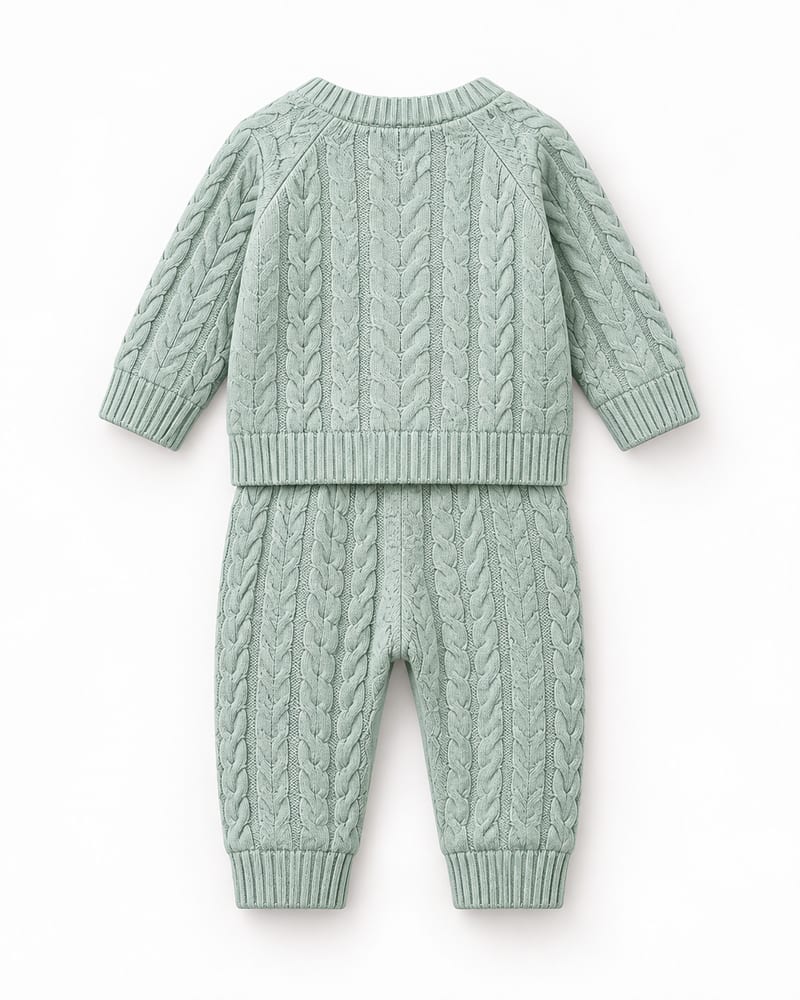
- A fourteen-month-old measured in September, near the top of 12–18 months: buy in 18–24 months, including knits like the Sage Cable-Knit Teddy Sweater & Jogger Set.
If your baby doesn’t follow the pattern
Some babies stay in one size far longer than the label suggests, and others race through sizes. If your baby was born early, has been unwell, or is simply growing at their own steady pace, trust the tape measure over the months. Measure again a month after the first check: two measurements show you the direction far better than one. If you have any worries about your baby’s growth itself, talk to your doctor or health visitor.
Buy in two rounds
Even with a good estimate, it is safer to buy about half the winter wardrobe in October or November and the rest once the cold arrives and you can see how your baby has grown. The first round covers the early chilly weeks; the second fills gaps in the size they are actually wearing.
When anything arrives, try it on straight away. Our exchange policy covers unused pieces in their original condition, with the original bill, within 7 days, so checking the fit on the day matters. The details are on our delivery and returns page.
Giving sizes to relatives
If grandparents or relatives are buying winter clothes, give them the size for January, not the size your baby is today. It helps to send your baby’s length in centimetres too, and to point them to the same size chart by age, height and weight so everyone is working from the same numbers.
Quick answers
Should I buy winter baby clothes a size up?
Buy outer layers and pieces that go over other clothes with some room, especially if your baby is near the top of their size. Sleepsuits and base layers should fit the size your baby is in when you use them.
How often should I measure my baby?
Every few weeks in the first months and every month or two after that is enough to notice when they are moving towards the next size.
What if my baby is between sizes in winter?
Choose the larger size for layers worn on top, and keep a few pieces in the smaller size for the first weeks. Buying the second half later lets you correct course.
Does the same check work for summer clothes?
Yes. Swap the coldest weeks for the hottest, usually May and June in most of Pakistan, and buy for the size your baby will be in then.