Rompers & sleepsuits
How to put a sleepsuit on a newborn, step by step
The order that makes dressing a floppy newborn in a sleepsuit quick and calm: laying it out, sleeves, feet, snaps, and what to do if your baby cries.
Get everything ready first
Dressing goes wrong mostly in the scramble: a snap you can’t find, a sleeve inside out, a baby getting cold while you sort it. So set up before you undress anyone. Choose a warm spot out of the fan’s direct draught, put the changing mat on the floor or another low, safe surface, and undo every snap on the clean sleepsuit. Lay it open and flat, inside facing up, with the neckline where your baby’s head will go.
Step by step
- Lay your baby on their back on the open sleepsuit, with their neck just below the neckline.
- Take one sleeve and bunch it up into a ring between your fingers, like gathering a sock.
- Put your hand through the sleeve from the cuff end, gently hold your baby’s hand, and draw the sleeve over their arm rather than pushing the arm in. Repeat on the other side.
- Do the same with each leg: gather it, guide the foot all the way into the covered foot, and check the toes lie flat.
- Close the crotch snap first, then each leg, then the front from the neck downwards.
- Finish with a quick check: two fingers slide in at the neck, the cuffs don’t press on the wrists, and the toes have room to wriggle.
Why you pull the sleeve, not push the arm
Newborns keep their hands curled, and tiny fingers catch easily in a sleeve. Drawing the fabric over the arm keeps the fingers together inside your hand and saves a lot of crying. It also avoids stretching the cuffs, which keeps them snug for longer.
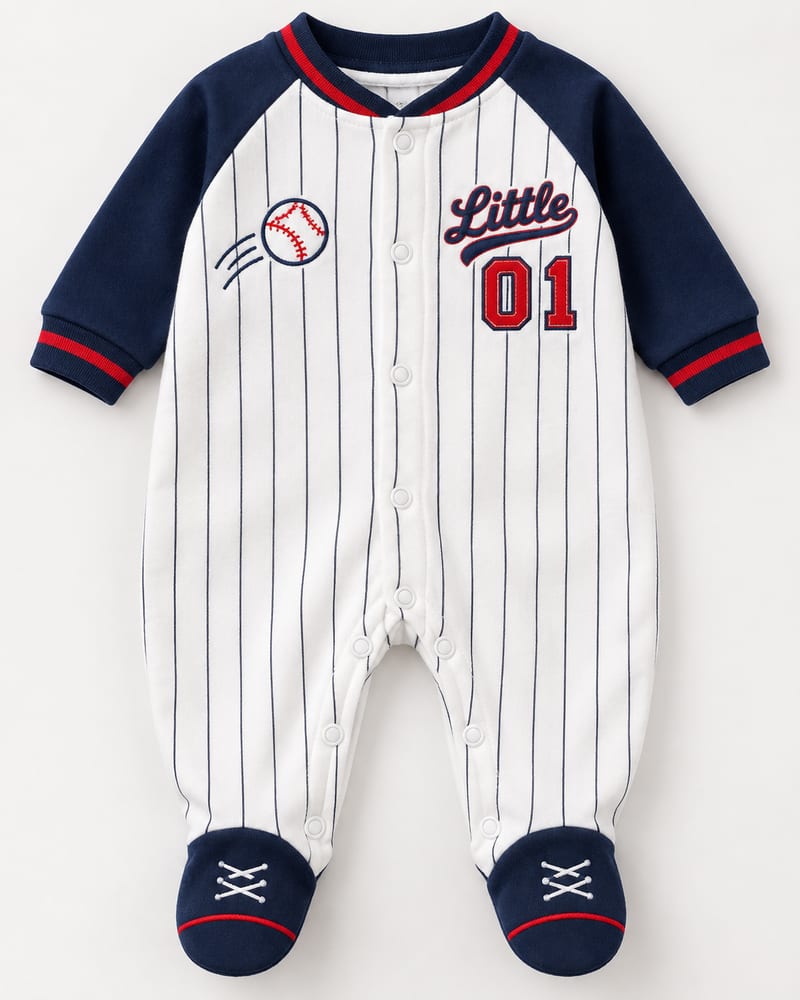
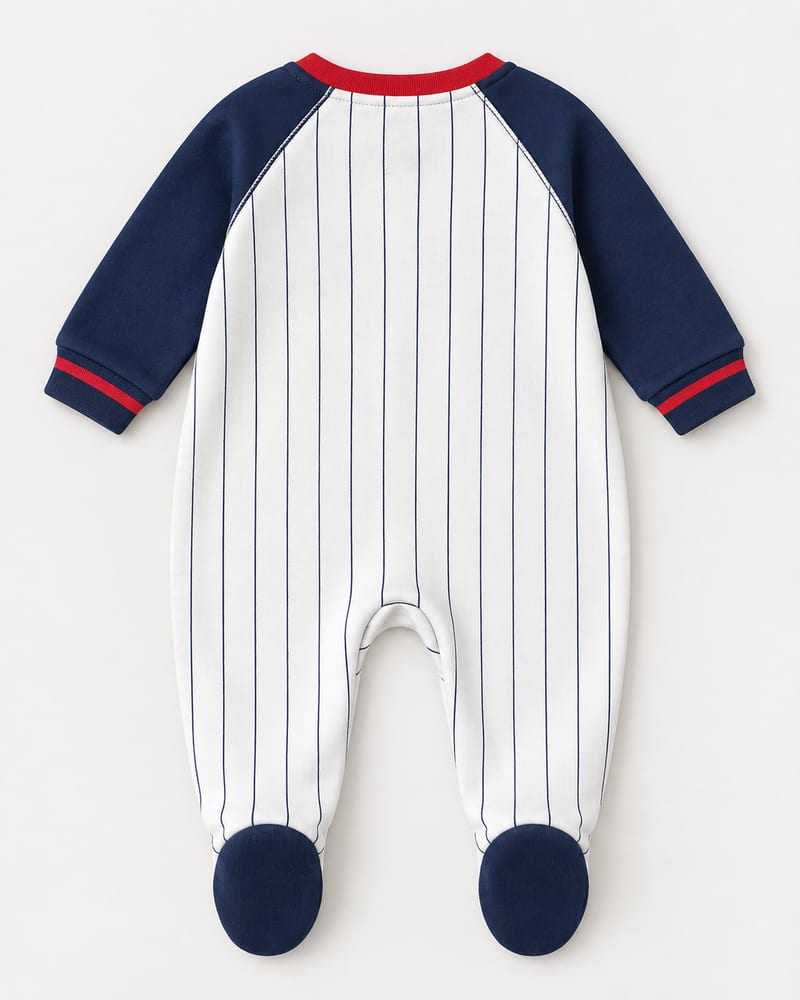
Sleeves that give a little room at the shoulder make this easier. The navy raglan sleeves on the Ivory Pinstripe Baseball Footed Sleepsuit run in one piece up to the neckline, a cut that is often easier to guide an arm through than a narrow set-in sleeve.
If your baby cries the whole time
Many newborns dislike being undressed, and it is not a sign you are doing it wrong. Lay a muslin or small towel over their tummy while you work, keep talking to them, and aim for quick rather than perfect. You can straighten a twisted leg once they are dressed and in your arms. As the weeks pass, most babies get used to it, and your hands get faster.
Getting help in the first days
If your baby is born in hospital, ask a nurse to watch you dress them once before you go home; a minute of feedback helps more than any article. At home, grandmothers and aunts often have their own methods, and it is fine to take what works and leave the rest. Some parents practise on a teddy before the birth, which sounds silly until you are doing it for real with a crying baby.
Choosing sleepsuits for the first weeks
You can see all our one-pieces on rompers and sleepsuits.
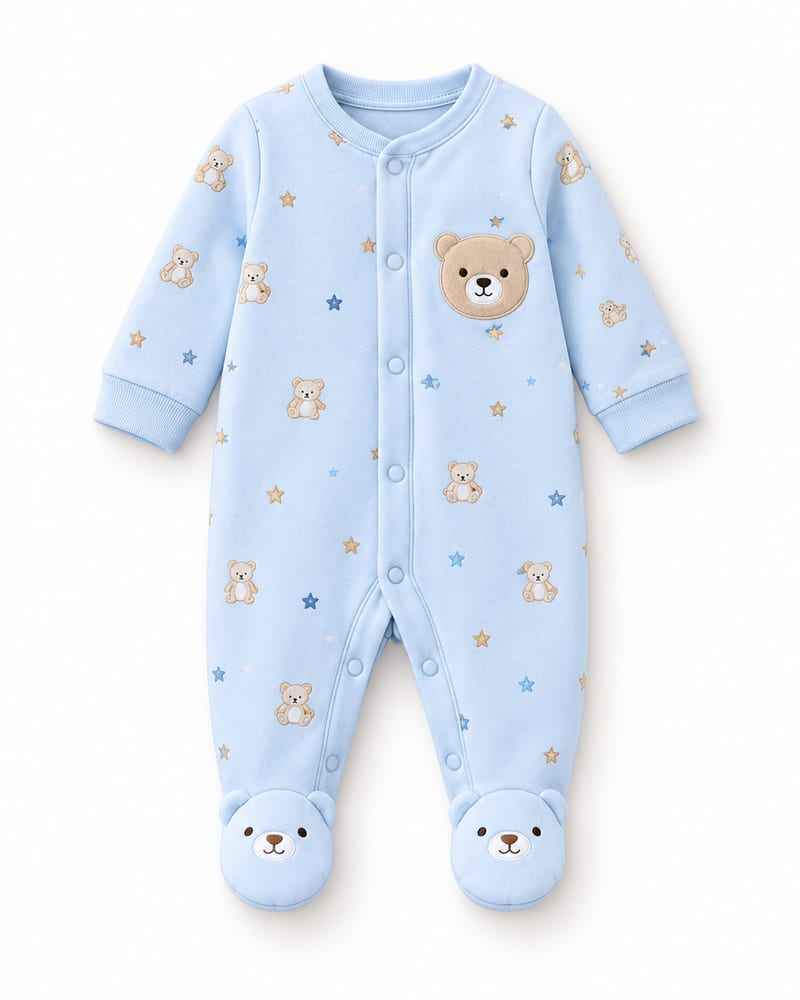
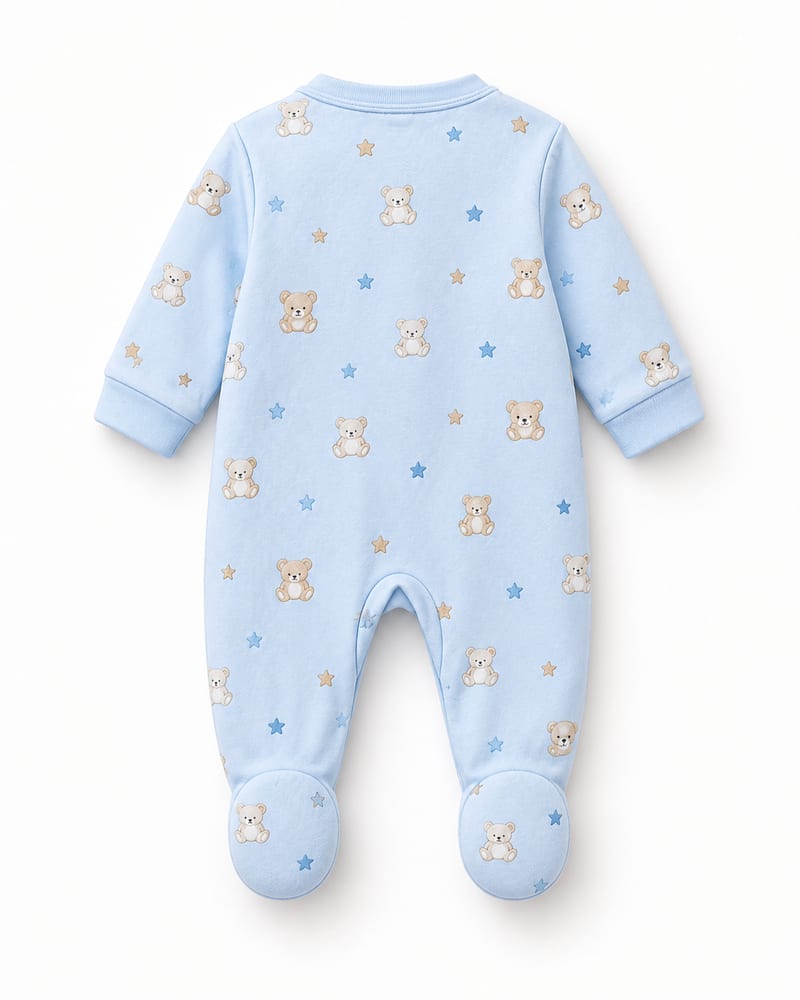
- A front opening that lays flat, so nothing goes over your baby’s head. The Sky Blue Teddy & Stars Footed Sleepsuit opens with front snaps.
- Soft, flat seams inside, especially at the neck and feet.
- Covered feet with room for the toes, so socks don’t keep disappearing.
- The right size: check your baby’s weight and length on our size guide rather than going by age alone.
Sources
Changing and dressing babies on a low surface, and never leaving them alone on a raised one: RoSPA’s guidance on preventing falls. Checking warmth at the chest or the back of the neck to avoid overheating: NHS and The Lullaby Trust.
Quick answers
Should I put a vest under the sleepsuit for a newborn?
Only if the room is cool. In a warm Pakistani summer a sleepsuit alone is often enough; feel the back of your baby’s neck or chest to check they are not too hot or cold.
How tight should the sleepsuit be?
Close to the body but not pressing anywhere. You should be able to slide two fingers in at the neck, and the feet should not bend the toes.
Which sleepsuit size should a newborn start in?
Most start in 0–3M. If your baby is expected to be large, have two or three in 3–6M ready too, and check the fit in the first week.
Is it easier to dress a newborn on the bed?
It feels easier, but babies can wriggle to the edge surprisingly early. A mat on the floor is safer and gives you both hands to work.