Newborn essentials
Newborn clothes you can skip buying
The baby clothes that often go unused in the first weeks, from shoes and jeans to too many tiny sizes, and what to buy instead so your money goes further.
Lots of the smallest size
Tiny clothes are irresistible, and that is exactly the problem. Newborns grow quickly, and some babies are too long for the first size within a few weeks. If you buy twenty outfits in 0–3M, several will be worn once or not at all, especially once relatives add their own gifts in the same size.
Buy enough of the first size for the first couple of weeks, following a list such as our newborn clothes checklist, and add a few pieces in 3–6M. Fill the gaps once you see how fast your baby is growing.
Shoes, jeans and stiff trousers
- Shoes: a newborn doesn’t walk, and hard soles and straps only get in the way.
- Jeans and stiff trousers: a newborn spends the day lying down and curled up, and a firm waistband presses on the tummy and the healing cord stump.
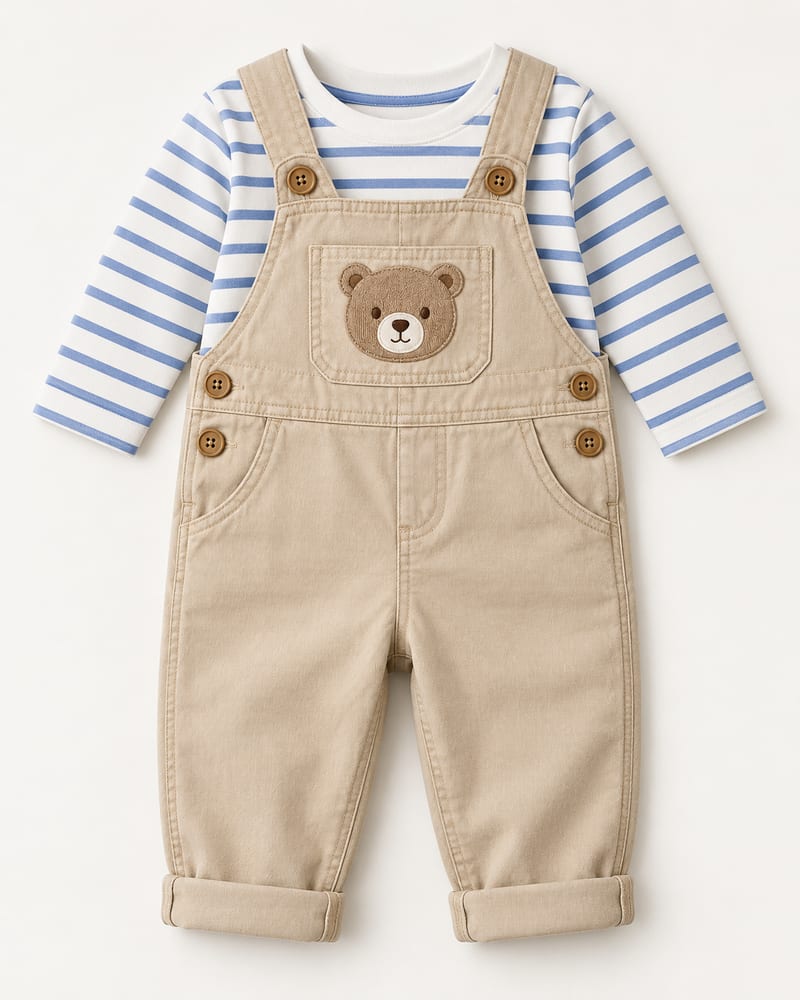
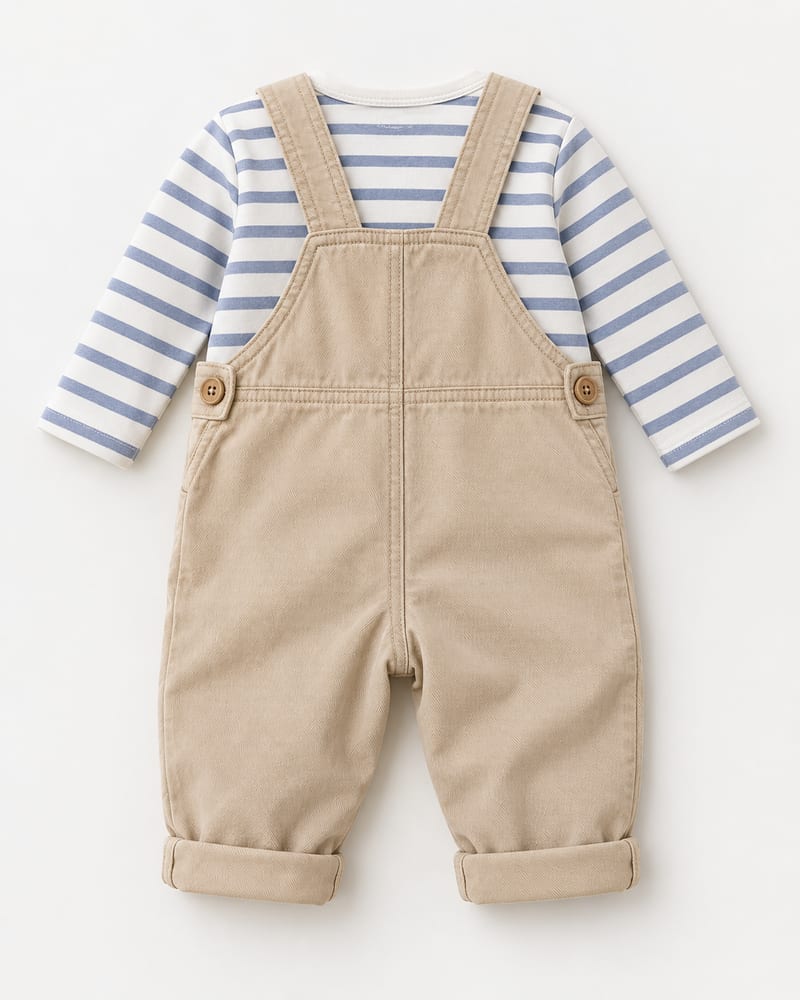
- Dungarees: lovely later, when your baby sits and crawls. Our Beige Teddy Dungarees & Striped Top Set comes in 0–3M, but most families get more wear from dungarees once babies are on the move.
Fussy outfits
A newborn needs changing many times a day, often at night and often in a hurry. Anything that makes a change slower tends to stay in the drawer: rows of small buttons, back fastenings, frocks with layers of net, stiff collars, belts, or heavy zari and sequin work that scratches and can’t go in the washing machine. One special outfit for photos and visitors is plenty for the first month.
Our newborn clothes checklist goes through the small design points worth checking.
Too many hats, blankets and extras
The same goes for gadgets sold as baby clothing accessories, such as special hangers, sleeve protectors and decorative headbands. They look sweet in a shop and rarely come out of the packet at home. Headbands and anything worn around the head or neck also shouldn’t be left on a sleeping baby.
- Hats: your baby needs one for going out in the cold and a sun hat in summer. They don’t need hats indoors, so a drawer full of them is wasted.
- Blankets: they are a very popular gift, so wait and see how many you receive before buying more.
- Bibs: a newborn uses muslin cloths more than bibs.
- Socks in bulk: newborn socks slip off constantly; footed sleepsuits often work better.
Next season’s clothes, bought too early
A sale on winter jumpsuits in March is tempting, but a baby born in spring might be in 6–12M by the following winter, not 0–3M. Buy seasonal pieces in the size your baby will be when the weather turns, and only when you can make a sensible guess. Our post on buying for next season shows how to match sizes to Pakistan’s seasons.
What to buy instead
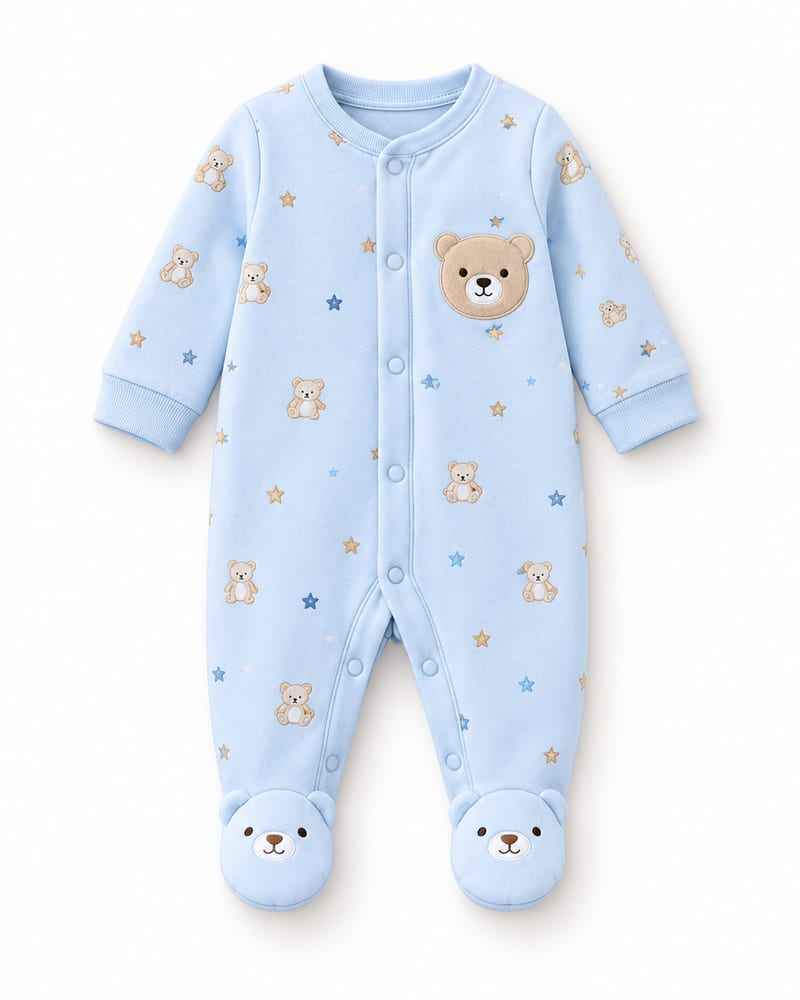
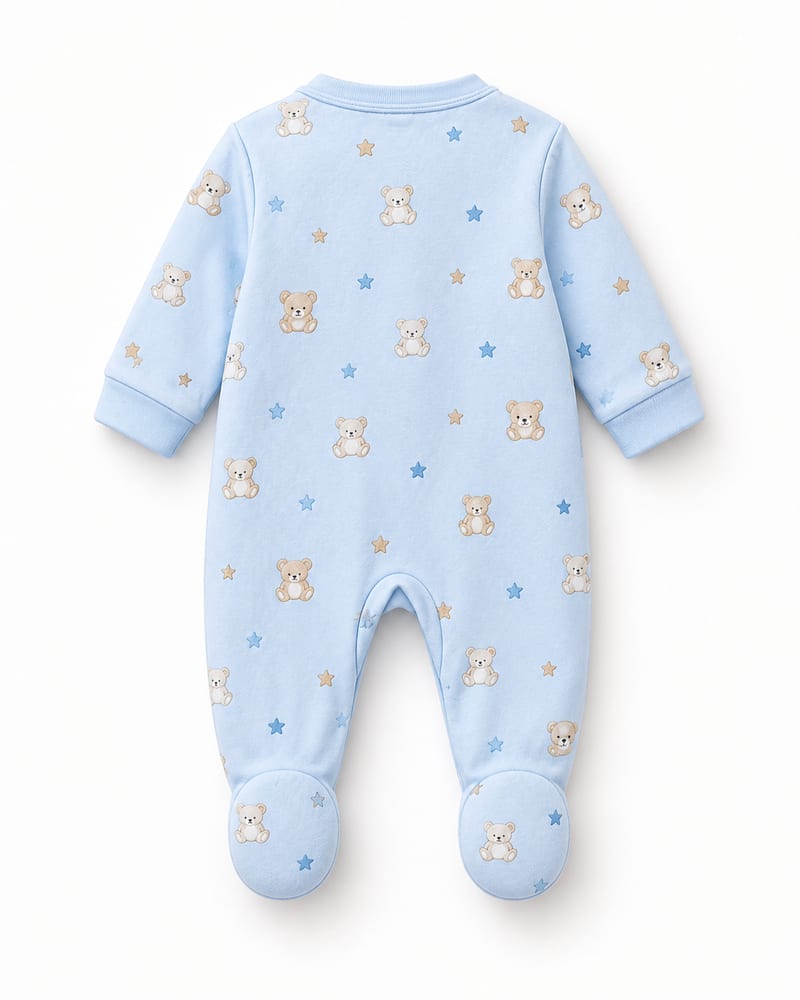
Put the money into the clothes you will reach for every day: extra sleepsuits and bodysuits, a couple of cardigans, and plenty of muslins. Front-snap footed sleepsuits, such as our Sky Blue Teddy & Stars Footed Sleepsuit, are worn day and night in the first weeks, so they give you the most use for your money. Then, once your baby is here, add what is actually missing.
Sources
Advice on hats indoors and on keeping anything around the head or neck away from a sleeping baby follows guidance from the NHS and The Lullaby Trust.
Quick answers
Are newborn frocks and dresses worth buying?
One is lovely for photos and visits. For everyday wear, frocks ride up, need leggings underneath and make nappy changes slower, so sleepsuits and bodysuits are more practical.
Should I buy clothes in a size smaller than 0–3M?
Only if you expect a very small baby. Our smallest size is 0–3M, which is roomy at first but fits for longer.
What newborn clothes get the most use?
Sleepsuits and bodysuits, by far. In the first weeks they are day and night clothes, so they are worth buying in good numbers.
What should I do with newborn clothes we never used?
If they are unworn with tags and you still have the bill, check the shop’s exchange policy quickly; ours is 7 days. Otherwise, they make a useful gift for the next baby in the family.