Embroidery & personalisation
Embroidered or printed names on kids’ clothes: which lasts?
How embroidered names compare with heat-transfer vinyl and printed names for durability, feel, washing and look, and which suits baby and kids’ clothes.
Three ways to put a name on clothes
Each has its place. The differences show up over months of washing, in the feel against a child’s skin, and in how the name looks up close.
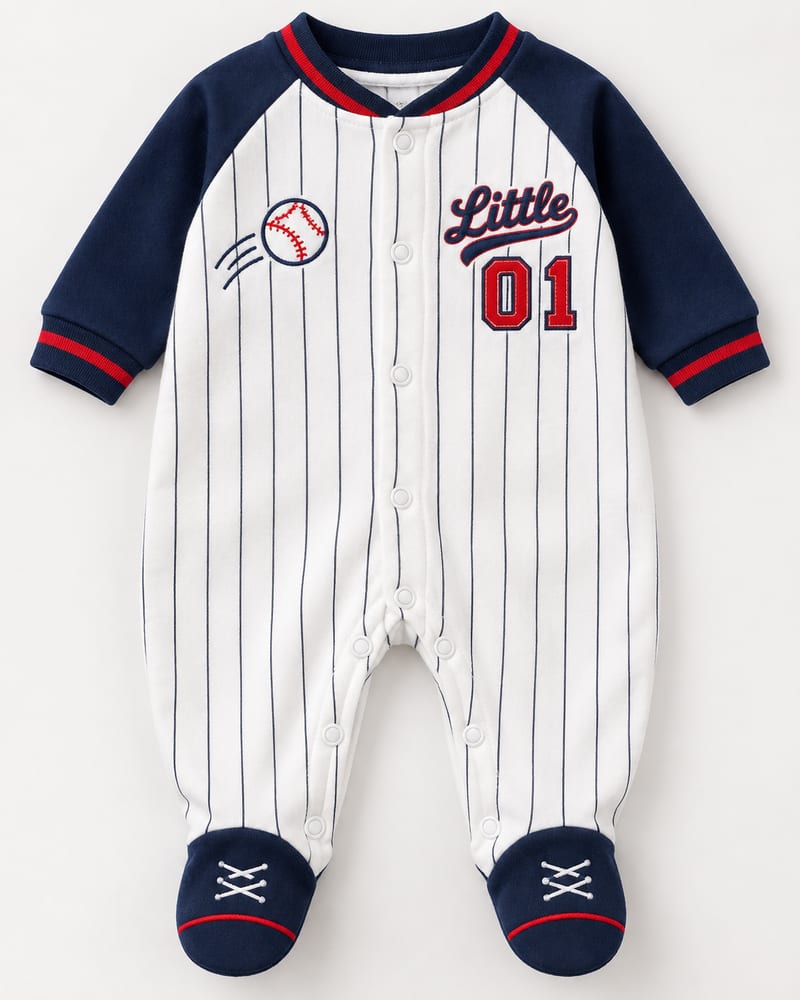
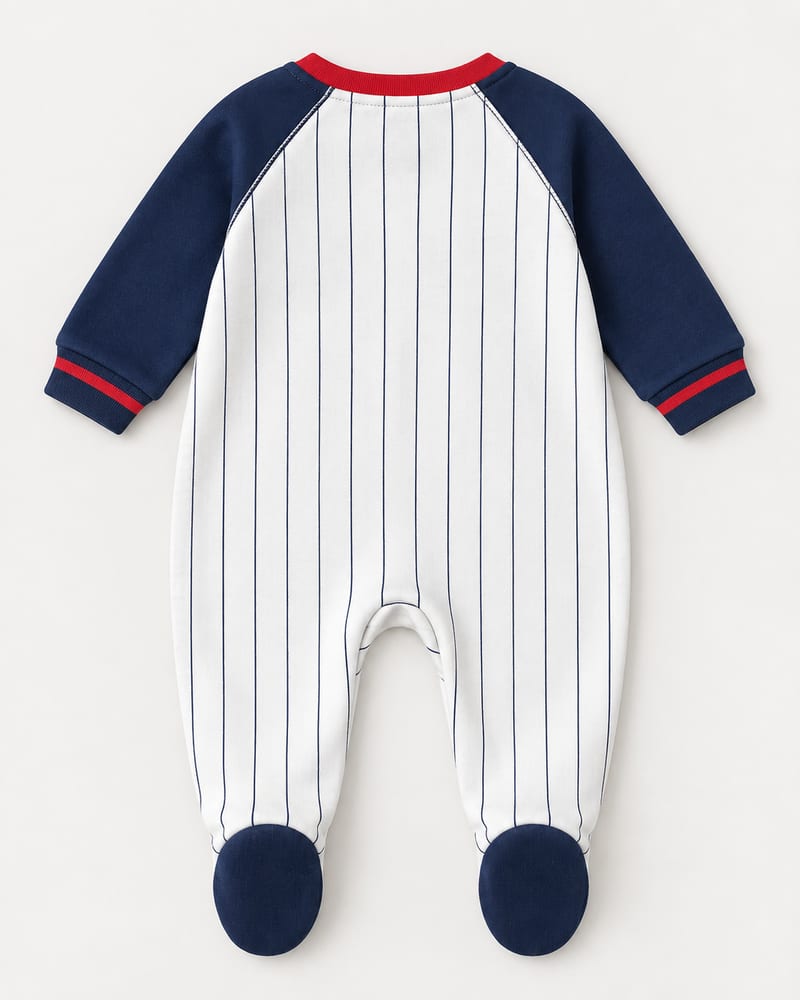
- Embroidery: the name is stitched into the fabric in thread, like the “Little 01” on our Ivory Pinstripe Baseball Footed Sleepsuit.
- Heat-transfer vinyl: letters are cut from a thin plastic-like film and pressed onto the fabric with heat.
- Printing: ink is printed onto the fabric or onto a transfer, from simple one-colour letters to full-colour designs.
How long each lasts
Embroidery generally lasts as long as the garment. The thread is part of the fabric, so it doesn’t peel or crack; the most common problem after many washes is slight puckering, which can usually be eased out. Heat-transfer vinyl looks crisp when new, but with repeated hot washes, tumble drying and ironing its edges can lift and the surface can crack, especially on stretchy knits that are pulled on and off over a baby’s head. Printed names vary with the method: some fade gradually, some crack where the fabric stretches, and good-quality prints can last well if washed cool.
For a piece that will be washed twice a week for a year, then handed down or kept, embroidery is the most durable of the three.
How each feels
- Embroidery: slightly raised on the front, with backing and the back of the stitches on the inside. Small designs feel soft; big dense ones are firmer.
- Vinyl: smooth and flat, but it doesn’t breathe, so a large vinyl panel can feel sticky and warm in hot weather.
- Printing: the softest on thin, flat prints; thicker inks sit on top of the fabric with a rubbery feel.
How each looks
Embroidery has texture and depth. The thread catches the light, and it looks more finished, which is why it is the traditional choice for names on eastern wear, occasion outfits and gifts. Vinyl gives bold, sharp, sporty letters, often used on party T-shirts and sportswear. Printing can do what neither of the others can: fine detail, many colours, even photographs.
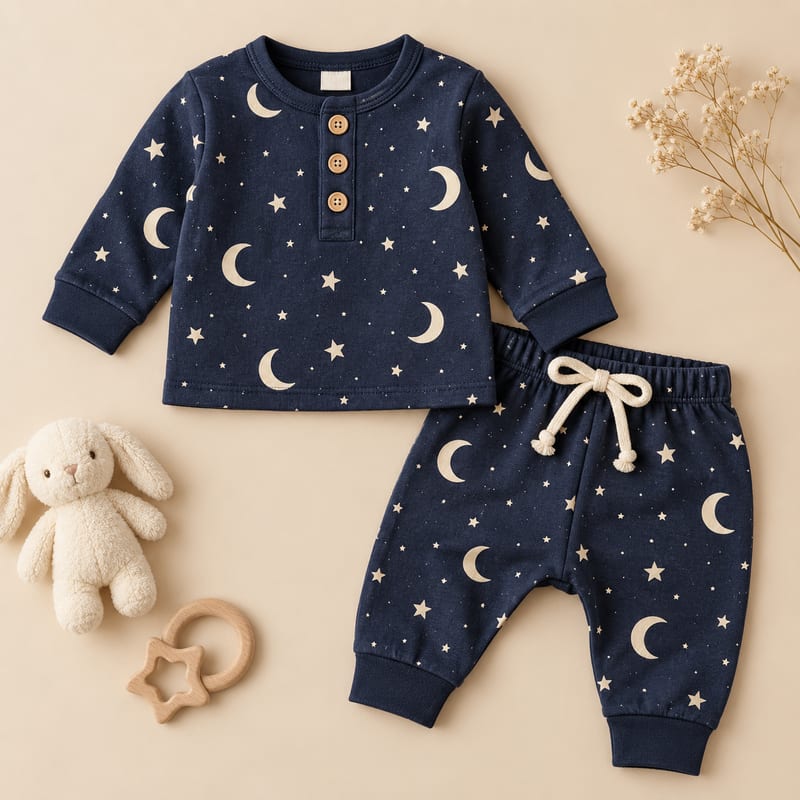
Prints and embroidery also combine well. A patterned fabric like our Navy Moon & Stars Henley & Jogger Set with a name embroidered on top gets the best of both: the print gives colour, the stitching adds a personal, raised detail.
Caring for each
- Embroidery: wash inside out, dry flat in shade, iron from the reverse.
- Vinyl: wash cool and inside out, avoid tumble drying, never iron directly over it.
- Prints: wash cool and inside out, avoid ironing over the print, and keep strong stain removers away from it.
Which to choose
For everyday baby clothes, gifts and anything you hope to keep, embroidery is the long-lasting choice. For a one-off party T-shirt that only needs to look good for a day, vinyl or print can be fine. For eastern wear, embroidery suits the style of the garment far better. And if the name is going on a very stretchy area, embroidery that is placed thoughtfully usually outlasts vinyl there. Our post on the softest fabrics for baby clothes covers the garments themselves.
Choosing between them
For a piece that will be washed every week or kept for years, embroidery is the safer choice; for a short-lived novelty top, a print is fine. Whichever you choose, wash the piece inside out on a cool cycle, as our washing guide explains.
Quick answers
Do embroidered names last longer than printed ones?
Generally, yes. Embroidery is stitched into the fabric, so it doesn’t crack or peel, while vinyl and some prints can wear with hot washing and stretching.
Is vinyl lettering safe for babies?
Follow the garment’s care label, and keep vinyl away from high heat. For everyday baby wear, many parents prefer embroidery or soft prints because they breathe better.
Can a printed fabric have an embroidered name?
Yes. Choose a thread colour that stands out against every colour in the print, and keep the name slightly larger than usual.
Which is cheaper, printing or embroidery?
It depends on the design and quantity. Printing is often cheaper for large runs of the same design, while embroidery suits one-off names; ask for a quote for your exact design.