Rompers & sleepsuits
Is a knitted romper warm enough for a baby in winter?
How warm a knitted romper is next to a knit set or a sherpa jumpsuit, what goes underneath, textured knits, and when a romper beats separates.
Warm enough indoors, but not a coat
A knitted romper is warm enough for a baby indoors on most winter days, and where winters are mild it can be the whole outfit. In colder places it works as a middle layer, with a bodysuit underneath and a jumpsuit or coat on top before you go out. As a rough guide, it is about as warm as a knit set, warmer than a sleepsuit, and nowhere near as warm as a sherpa jumpsuit.
A knitted romper is a one-piece made from knitted yarn rather than the flat jersey of an everyday romper. Most have long sleeves, a buttoned or envelope neck and snaps underneath, and many come with a matching hat. The popular ones have a texture such as honeycomb, cable or a simple stripe.
Where it sits on the warmth ladder
It helps to place the knitted romper among the clothes most families already have. From coolest to warmest:
- A short-sleeved romper or bodysuit: summer, and warm afternoons.
- A footed sleepsuit in plain jersey: arms, legs and feet covered, but the fabric is thin.
- A knitted romper: thicker fabric that traps warm air, with the arms covered, though often with bare ankles and feet.
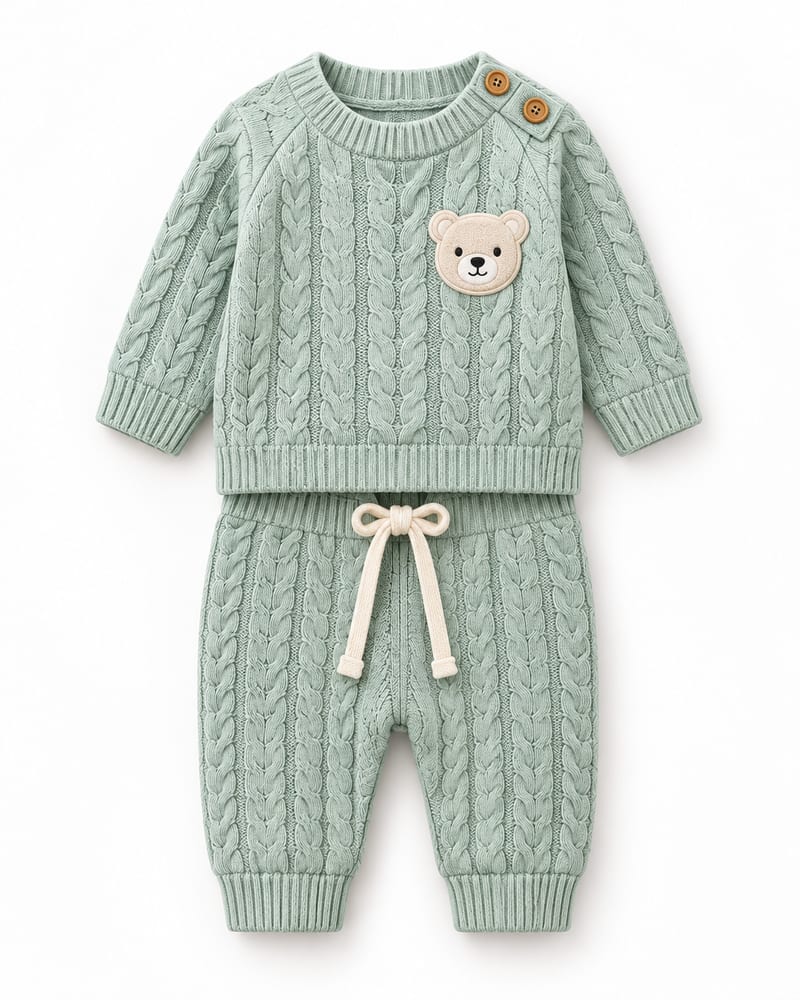
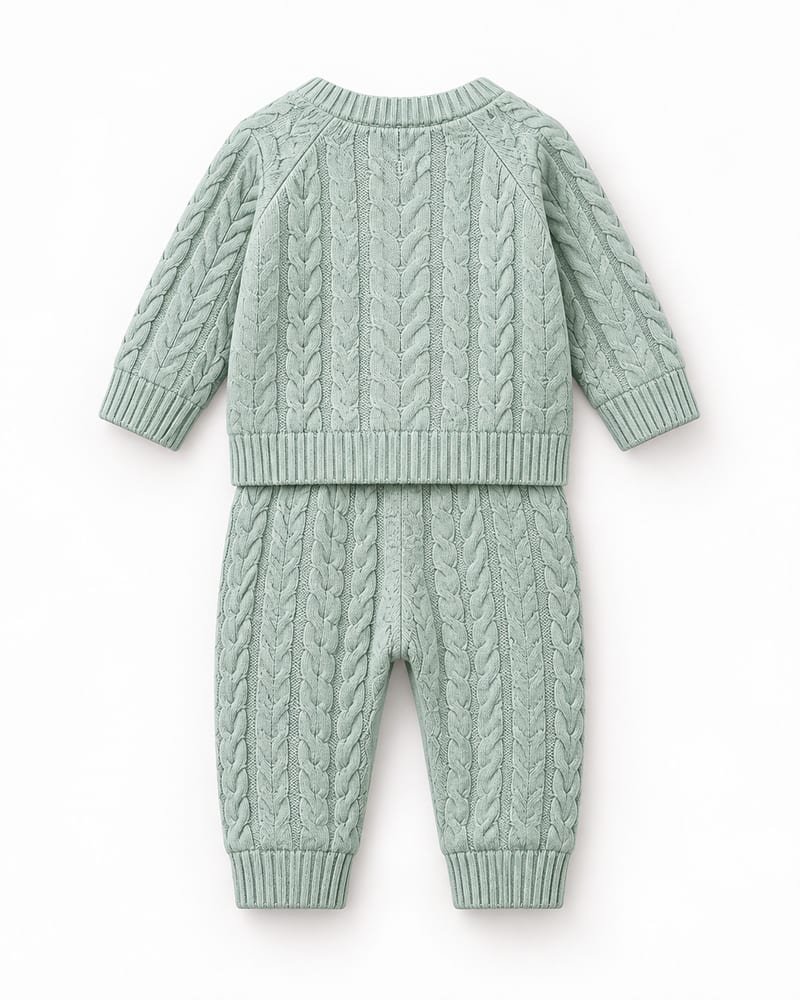
- A knit two-piece, such as our Sage Cable-Knit Teddy Sweater & Jogger Set: similar warmth, with the sweater overlapping the joggers so the tummy stays covered when your baby is lifted.
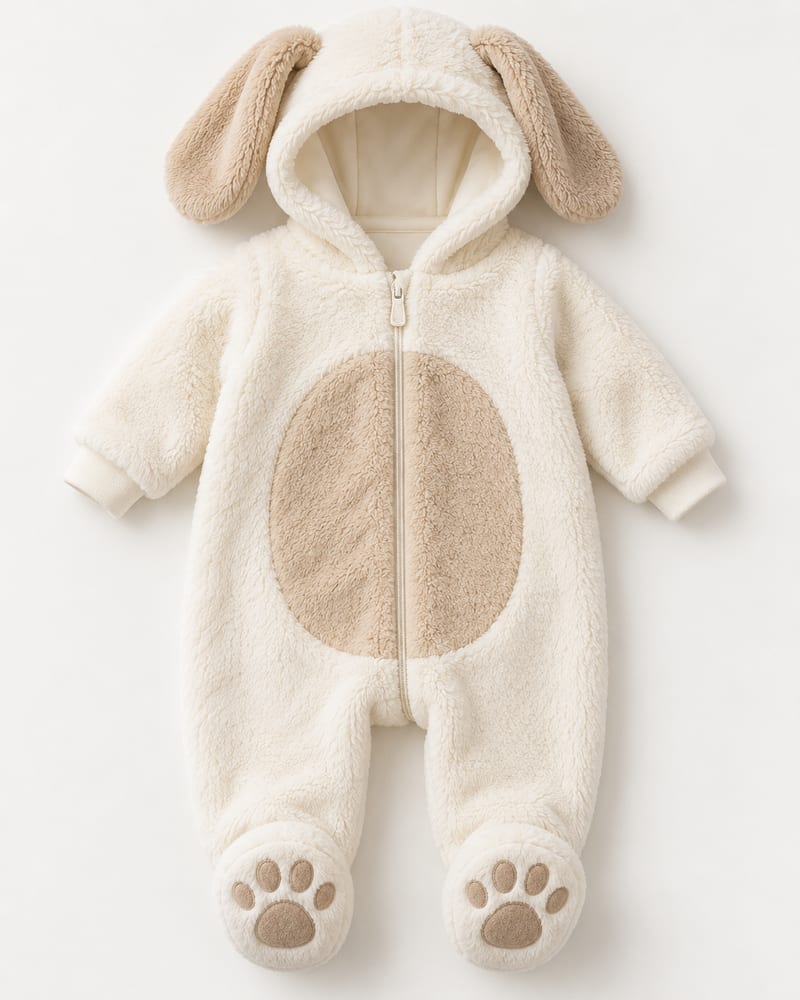
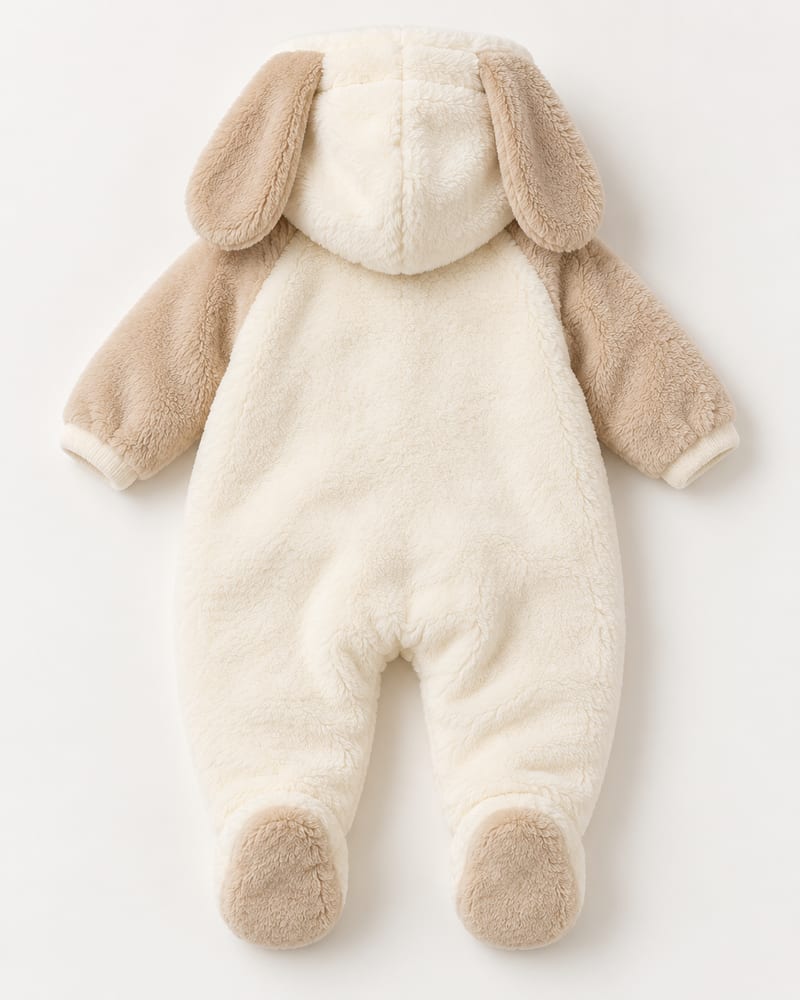
- A sherpa hooded jumpsuit, such as our Cream Puppy Sherpa Hooded Jumpsuit: the going-out layer, with a hood and covered feet, worn over everything else and taken off indoors.
Not every knit is equally warm
Within that middle rung, the knit itself makes a difference. A chunky cable or honeycomb texture holds more warm air than a fine, flat knit, while open, lacy knits look pretty but let a draught straight through. Fibre matters too: a wool or wool-blend knit stays warmer than a cotton knit of the same thickness, even when it gets a little damp. That makes wool a better choice for a cold, damp winter, and soft cotton knits a better match for a mild one.
Texture changes the fit too; our post on ribbed, waffle and cable knits explains how each one sits.
What goes underneath, by climate
Almost every knitted romper is better with a vest or bodysuit underneath. It keeps the knit off sensitive skin, catches a nappy leak before it reaches the knit, and adds a thin layer of warmth. Then build up or strip back to suit your weather and your home.
Indoors, check your baby rather than the weather app. Feel the back of the neck or the chest: warm and dry is right, hot or sweaty means a layer should come off. Our guide to dressing a baby for winter covers heaters and night-time layers, and what to wear under a sherpa jumpsuit explains the outdoor layers.
- A mild winter, where only the evenings feel cool: a short-sleeved bodysuit and socks under the romper are enough, with a cardigan after dark.
- A cool, damp winter, with chilly mornings and nights: use a long-sleeved bodysuit and socks or tights, and add a jumpsuit for any trip outside.
- A cold winter in a centrally heated home: the romper is the indoor outfit; outdoors it goes under a hooded jumpsuit, with a hat and mittens.
- Freezing weather, or a home that stays cold: the romper is only a middle layer, between a long-sleeved bodysuit and tights and a warm jumpsuit.
Romper or separates?
For a young baby, a romper has real advantages. There is no waistband pressing on a full tummy, no gap at the back when they are picked up, and one piece to put on instead of two. In the first six months or so, when babies are carried, fed and laid down far more than they move, a knitted romper with snaps underneath is very easy to live with.
Once your baby is crawling, separates often win. Knees push against the knit and can pull a romper out of shape, a spill down the front means changing the whole outfit in a cold room, and a romper with no leg snaps has to come right off for every nappy. A two-piece lets you change one half at a time. Our rompers and sleepsuits include footed sleepsuits and hooded jumpsuits that sit either side of a knitted romper through the winter.
Hats, car seats and checks before you buy
If the romper comes with a matching hat, keep the hat for outdoors and photos. A baby lets off heat through the head, so the NHS and The Lullaby Trust say hats come off indoors and never stay on for sleep. For car journeys, take off bulky outer layers and tuck a blanket over the harness instead, as the American Academy of Pediatrics and RoSPA advise. Before you buy, look for:
- Snaps at the crotch or down the legs, so a nappy change doesn’t mean undressing a baby in a cold room.
- A neckline that stretches or opens with shoulder buttons, since thick knits have less give than jersey.
- Firmly sewn buttons, and no loose pom-poms, tassels or long ties on the romper or its matching hat.
- A closer knit for a baby who grabs and kicks; little fingers and toes can catch in open, lacy holes.
- Room in the body for a bodysuit underneath without the snaps straining.
- Smooth seams inside, and no stray threads that could wind around a toe.
Quick answers
Can a baby wear a knitted romper outside in winter?
On a mild afternoon, yes, with socks and a cardigan to hand. In colder weather, use it as a layer under a jumpsuit or coat with a hat, and take the outer layer off once you are indoors.
Does a knitted romper need a vest underneath?
Usually, yes. A bodysuit keeps the knit off your baby’s skin, takes the first hit from a nappy leak and adds a little warmth. Choose short sleeves for mild days and long sleeves for cold ones.
Is a knitted romper good for sleep?
It can be, in a cool room, as long as your baby doesn’t get too hot. Take off any hat, avoid chunky buttons at the back, don’t pile heavy blankets on top, and check the chest or neck. If you are unsure, ask your doctor.