Baby sets & separates
Hand-knitted woollen suit or a shop-bought knit set?
Grandma’s hand-knitted sweater or a ready-made knit set: how they compare for warmth, softness, fit and washing, and how to use both this winter.
How they differ
You don’t have to choose. A hand-knitted sweater or suit from a grandparent is usually thicker and warmer, and carries a lot of love; a shop-bought knit set is usually finer, more even, and easier to put on, wash and layer. Many families use a shop set as the everyday base and a hand-knit cardigan or sweater over it for outings and the coldest days, after a quick safety check of the hand-knit.
In many families, a baby’s first winter still arrives with a bag of hand-knits: a sweater, a cardigan buttoned down the front, a bobble hat and tiny booties, often knitted through the pregnancy by a grandmother or an aunt. Ready-made knit sets fill the shops too. They are different garments, made in different ways:
- Yarn: hand-knits are often made from thick craft-shop yarn, which may be wool, acrylic or a blend. Machine-knit sets usually use a finer yarn.
- Stitch: hand-knit tension varies with the knitter and the evening; machine knitting is even, with smaller stitches.
- Stretch: fine machine knits with ribbed cuffs and waistbands spring back into shape; a loose hand-knit stretches and tends to stay stretched.
- Seams: hand-knits are usually sewn up with yarn, which can leave a thick ridge; machine-knit sets have flatter seams.
- Fit: a hand-knit follows the knitter’s pattern and some guesswork; a shop set follows a size chart.
Warmth and softness
A thick hand-knit traps a lot of air, so it is warm, but it is also bulky, and a baby in a heavy sweater in a heated room soon gets too hot. Fine machine knits are less warm on their own but layer better, and two thin layers are easier to adjust than one thick one. Open, lacy hand-knit patterns look pretty but let the wind straight through, so they suit indoor wear better than a cold, windy evening outside.
Softness depends mostly on the yarn. Coarse wool can itch, cheap acrylic can feel squeaky and pill quickly, and a fine, soft yarn of either kind can feel gentle. Rub a sleeve against the inside of your wrist or your neck. If it prickles you, it will prickle a baby, so put it over a long-sleeved layer rather than next to the skin.
Safety checks on hand-knits
Hand-knits are made with care, but not to any safety standard, so give each one a quick check before the first wear and again every few weeks.
- Holes and long loose stitches: tiny fingers and toes can catch in open patterns and loops, especially inside booties and mittens. Turn them inside out and look.
- Loose yarn ends inside: trim and weave them in, because loose strands can wrap around fingers and toes.
- Ties at the neck: long ribbons or cords on cardigans and hats should be removed, or replaced with a button.
- Buttons and pompoms: tug each one firmly, re-sew anything that moves, and skip small decorative buttons near the mouth.
- The neck opening: a pullover that is tight over the head is a struggle every time. A cardigan, or a sweater with shoulder buttons, is easier.
- Sleep: take off knitted hats, and swap a thick hand-knit for lighter sleepwear, before your baby sleeps, so they don’t get too hot.
Washing without stretching
Hand-knits stretch because a thick, loosely knitted garment is heavy when wet, and that weight pulls the stitches long if it is hung up to dry. Wash them by hand in cool water with a gentle detergent, squeeze rather than wring, roll them in a towel to take out the water, and dry them flat, patted into shape and out of strong sun. Wool can shrink and felt with hot water or rubbing, and acrylic can go limp and lose its shape with heat. Some bobbling is normal on both; see how to remove pilling from baby clothes.
Shop-bought sets come with a care label, and following it is the safest course. Our guide on how to wash baby clothes covers everyday washing.
Using both this winter
The easiest way is to give each piece a job. The shop-bought set is the base: quick to put on, easy to wash and comfortable enough for a whole day of crawling, napping and feeding at home. The hand-knit goes on top for going out, for visiting the relative who knitted it, and for the coldest mornings, then comes off indoors.
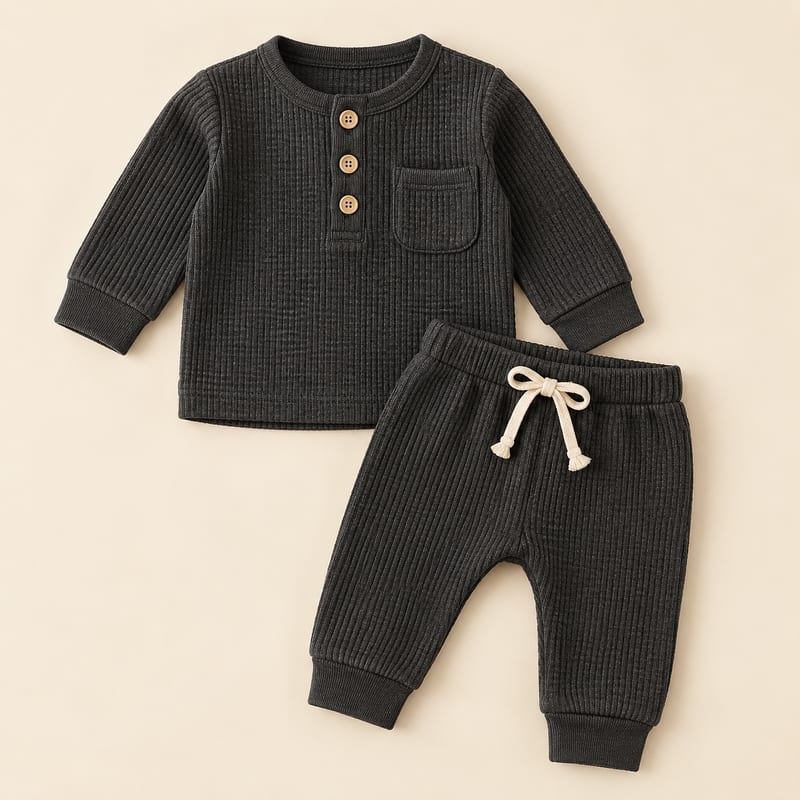
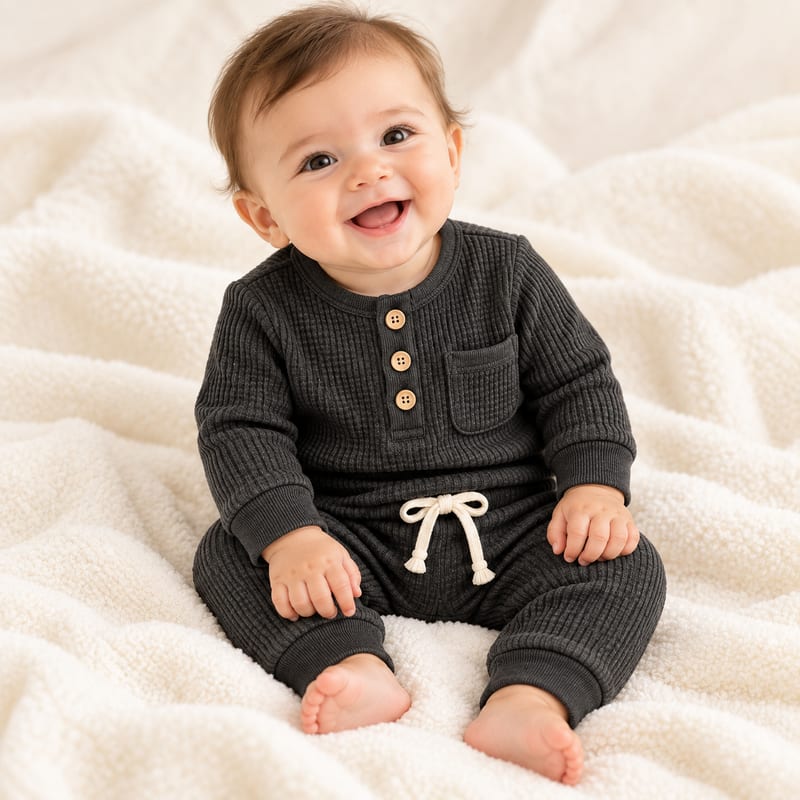
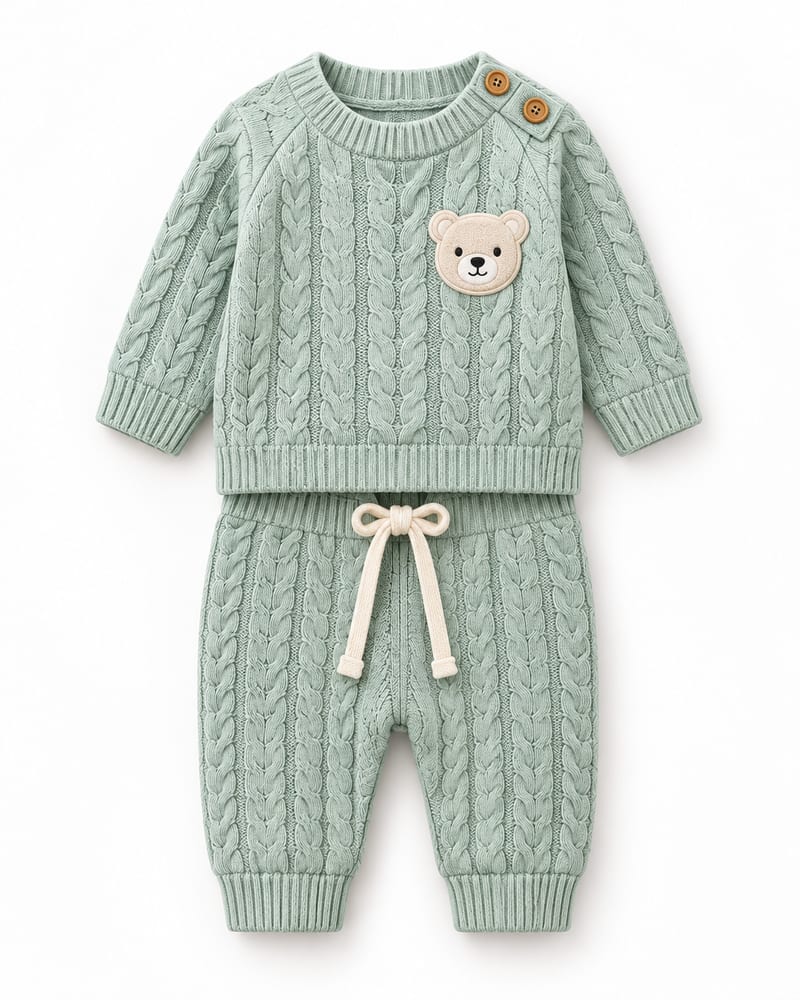
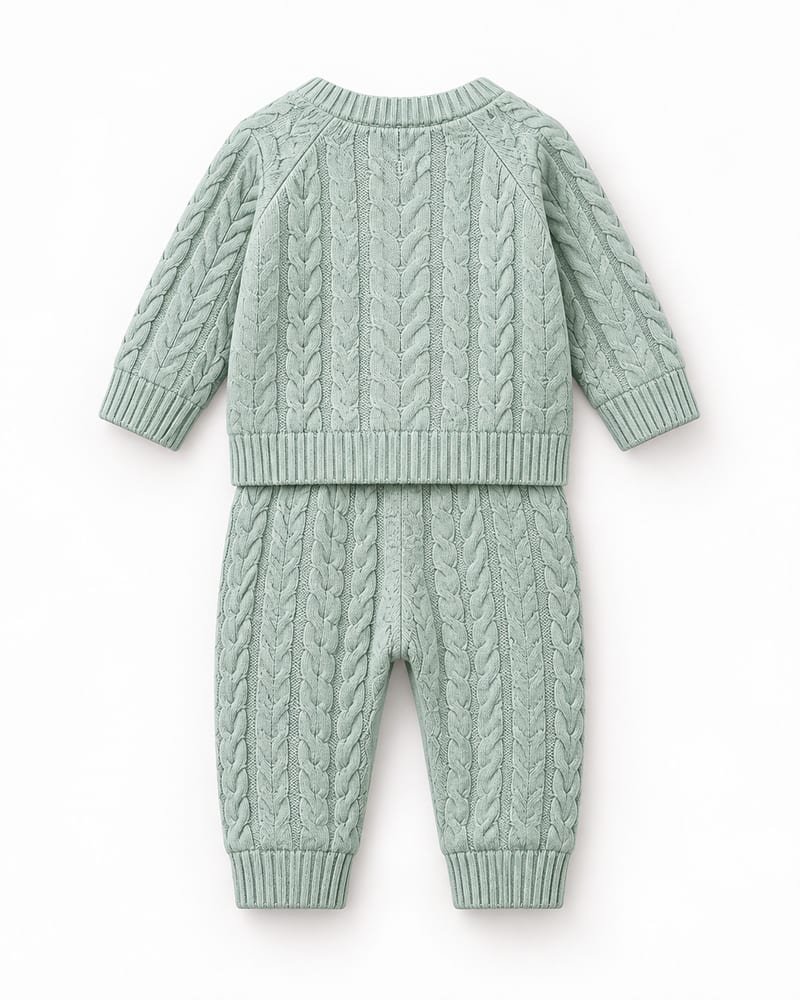
For example, the Charcoal Waffle-Knit Henley & Jogger Set is a soft wool waffle knit that works on its own for most days indoors, with a hand-knitted cardigan over it for the drive to Granny’s house. The Sage Cable-Knit Teddy Sweater & Jogger Set has the cabled look of a hand-knit, with buttons on the shoulder for easy dressing, and a hand-knitted hat and booties finish it for an outing. You can see all our sets on the baby sets page, and our post on ribbed, waffle and cable knit sets explains how each one fits.
A shop set is usually easier when someone else is dressing your baby, when you need several clean outfits a week, and for a baby who hates things pulled over their head. The hand-knit wins as a warm outer layer, as a gift with meaning, and as a keepsake for the next baby. If someone is knitting for your baby this winter, tell them the size your baby will be in by December and January, not their size today.
Quick answers
Are hand-knitted sweaters warm enough for a baby?
Usually, yes. Thick hand-knits are often warmer than shop-bought knits, but loose or lacy patterns let wind through. Layer them over a long-sleeved top and take them off indoors.
Is hand-knitted wool itchy?
It can be, if the yarn is coarse. Test it against the inside of your wrist; if it prickles, put a soft layer underneath so it doesn’t touch the skin.
How do you wash a hand-knitted baby sweater?
By hand in cool water with a gentle detergent. Squeeze rather than wring, roll it in a towel, and dry it flat in shape, out of strong sun.
Can a baby sleep in a hand-knitted sweater?
It is better not to. Thick sweaters and hats can make a sleeping baby too warm. Take them off for sleep and choose sleepwear that suits the room temperature instead.